Celebrating new commissions from
Kristiina Ehin, Estonia, Matthew Berrill, Maeve Clancy, Kathleen Furey, & Joyce Little, Ireland
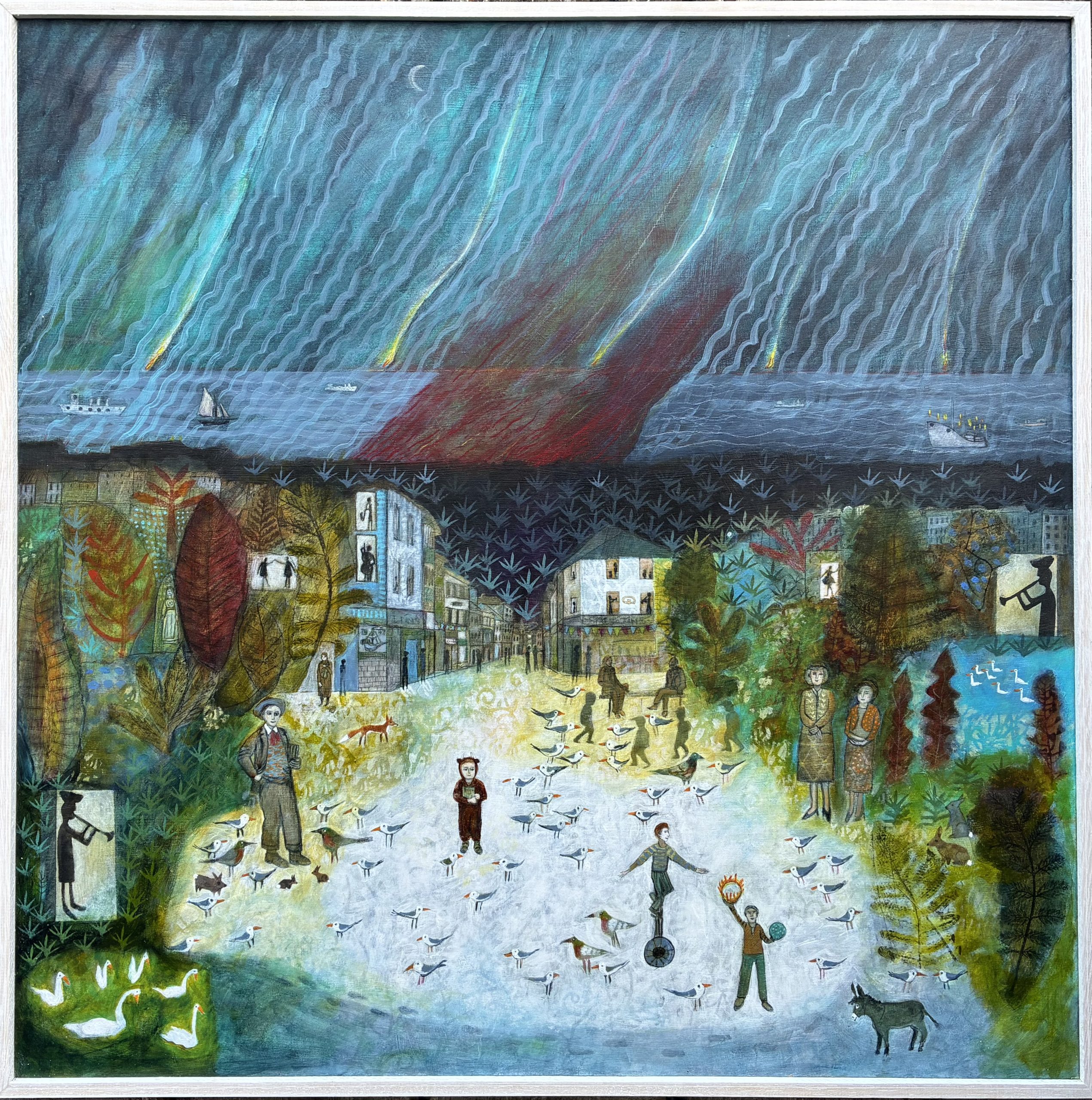
Kathleen Furey, Imaginary Meetings: Seeking Common Ground 2026
My initial idea for this project centred on two works connecting Galway and Estonia: the statue gifted to Galway by the people of Estonia in 2004 to mark Estonia’s accession to the European Union, and Seamus Heaney’s poem Beacons at Bealtaine, commissioned for The Day of Welcomes (Lá na bhFáilte) to mark the occasion.
During conversations with the other artists, we explored motherhood, nature, music, dance, language and identity. Ideas and phrases that stayed with me included symbolic lyricism, childhood innocence, folklore, fairytales, humour, life stories and “small stories”—the everyday experiences that help us find common ground. Kristiina Ehin sent us her poem “Seeking Common Ground”
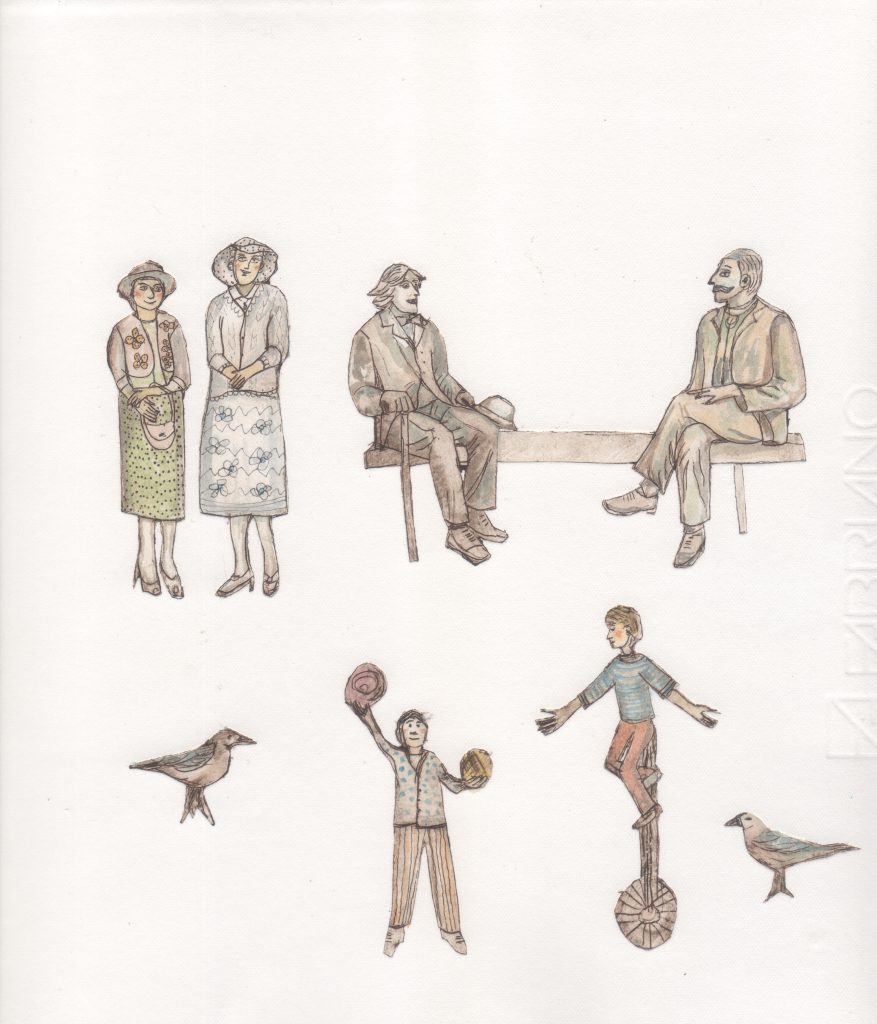
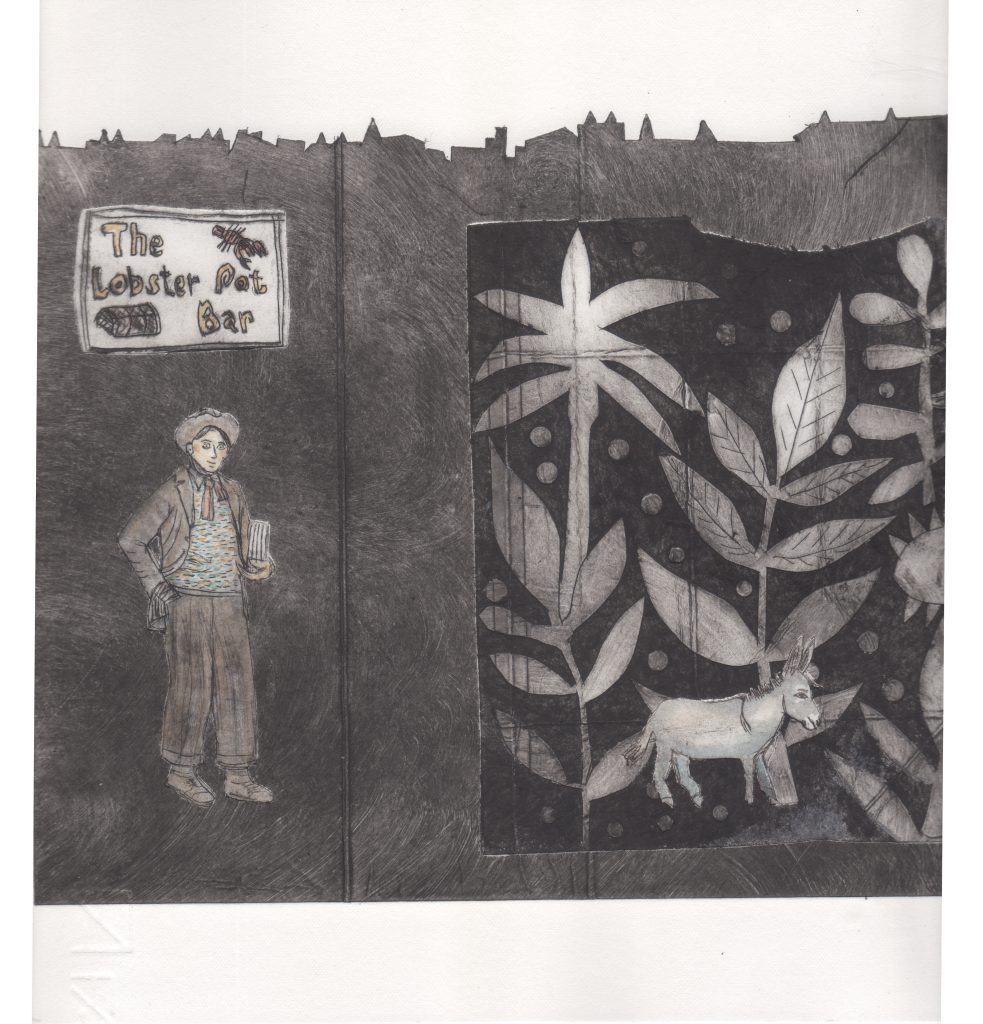
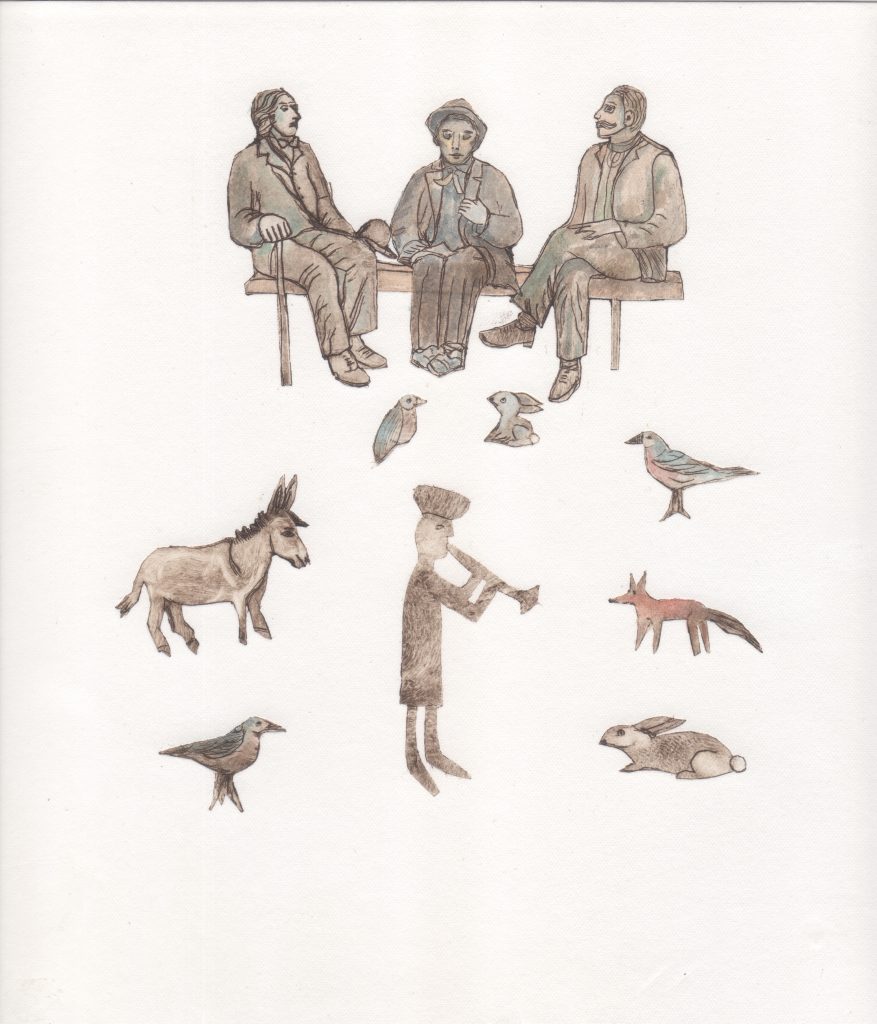
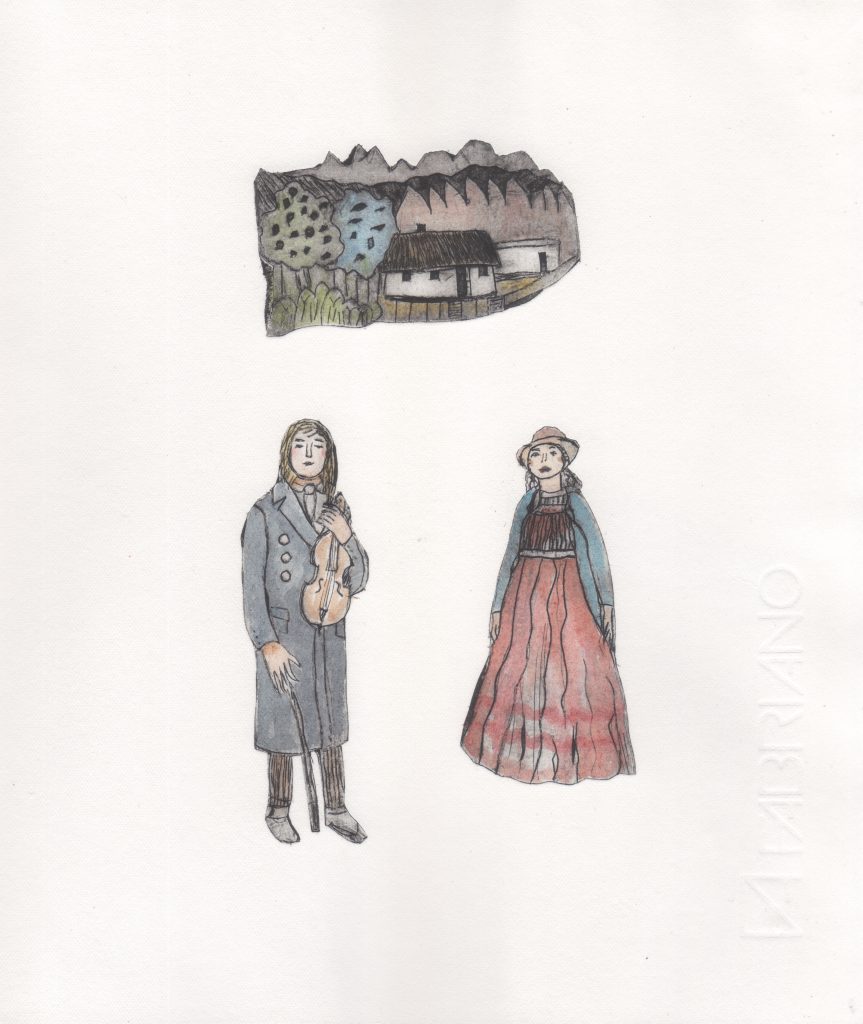
For my drypoint prints, I returned to the two poets, Oscar Wilde and Eduard Vilde, and imagined them meeting on the bench created by Estonian artist Tiiu Kirsipuu. I then brought the Galway writer Pádraic Ó Conaire into this imagined encounter. A beloved figure in Galway and a strong advocate for the Irish language, Ó Conaire is regarded as a pioneer of modern Irish-language writing. His statue stood in Eyre Square throughout my childhood, and I remember visiting it when I lived in Galway. In one print, I picture him sitting with Wilde and Vilde, surrounded by animals and street entertainers.
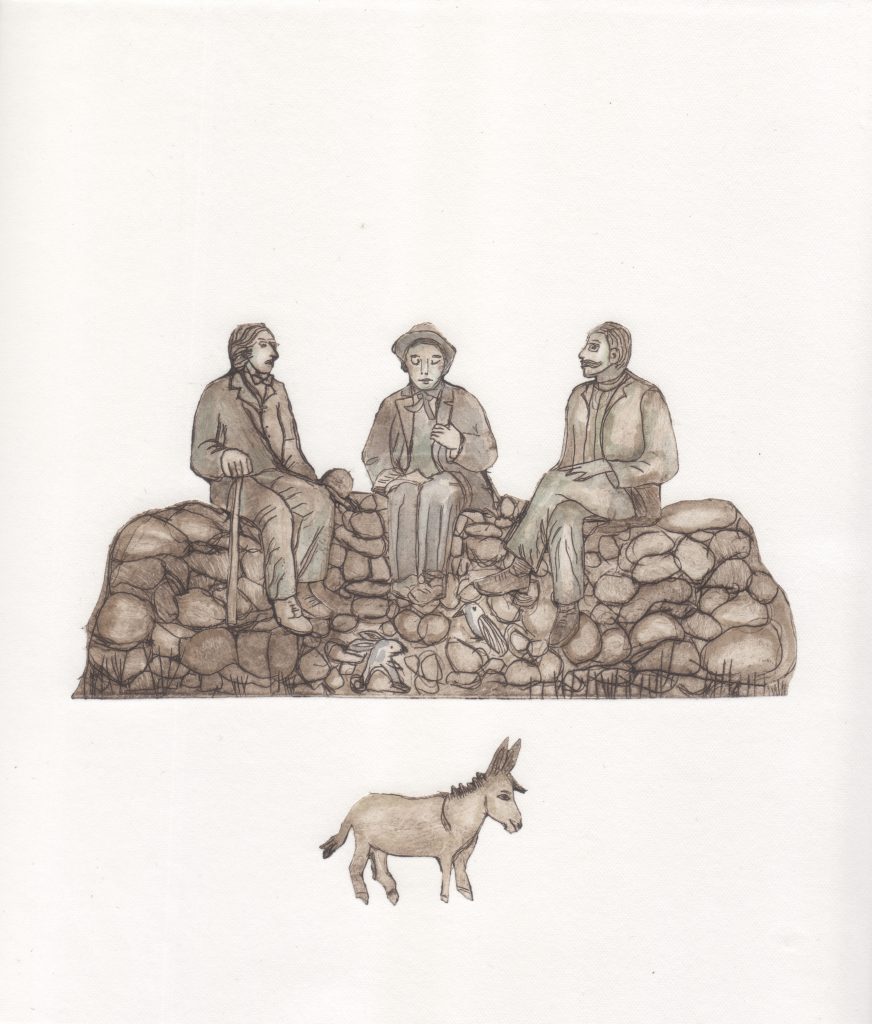
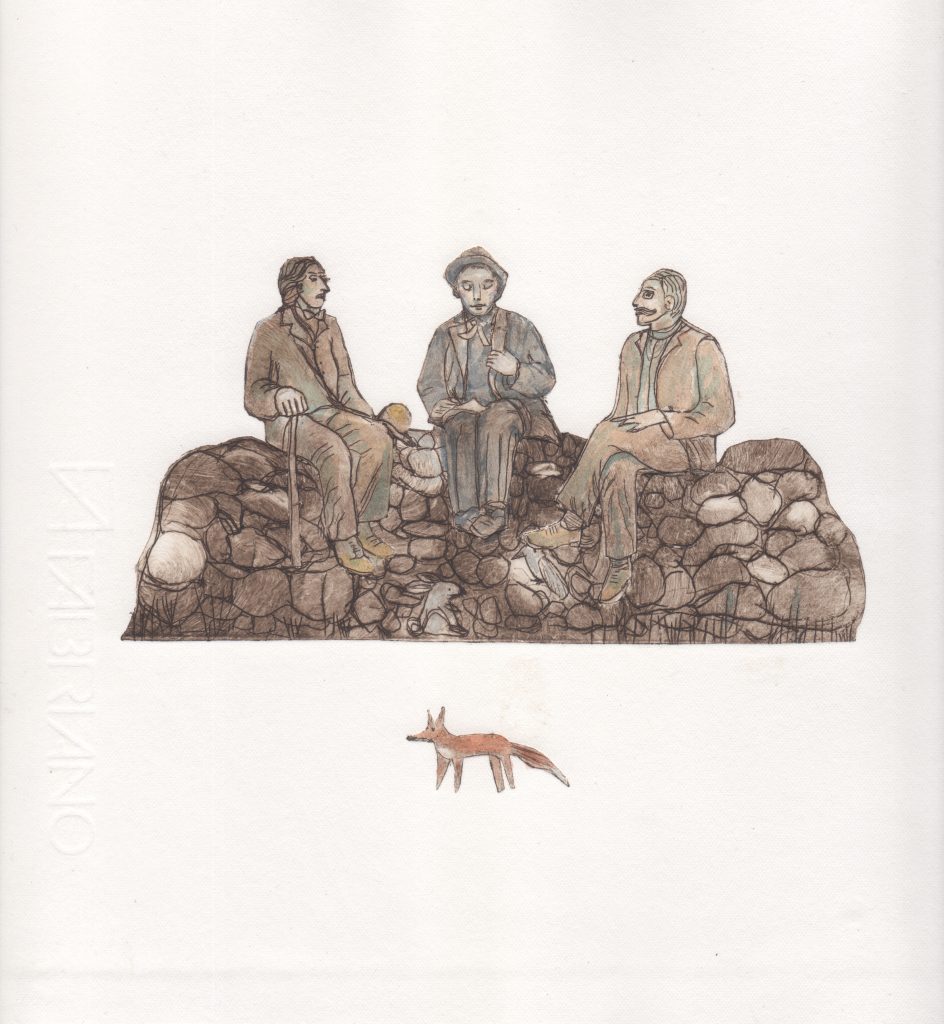
In another, Ó Conaire brings the poets to Connemara. They sit on a stone wall, echoing the pose of Ó Conaire’s statue in Galway by Albert Power. A small donkey from M’asal beag dubh, one of Ó Conaire’s best-loved stories, joins them, a fox is present in another.
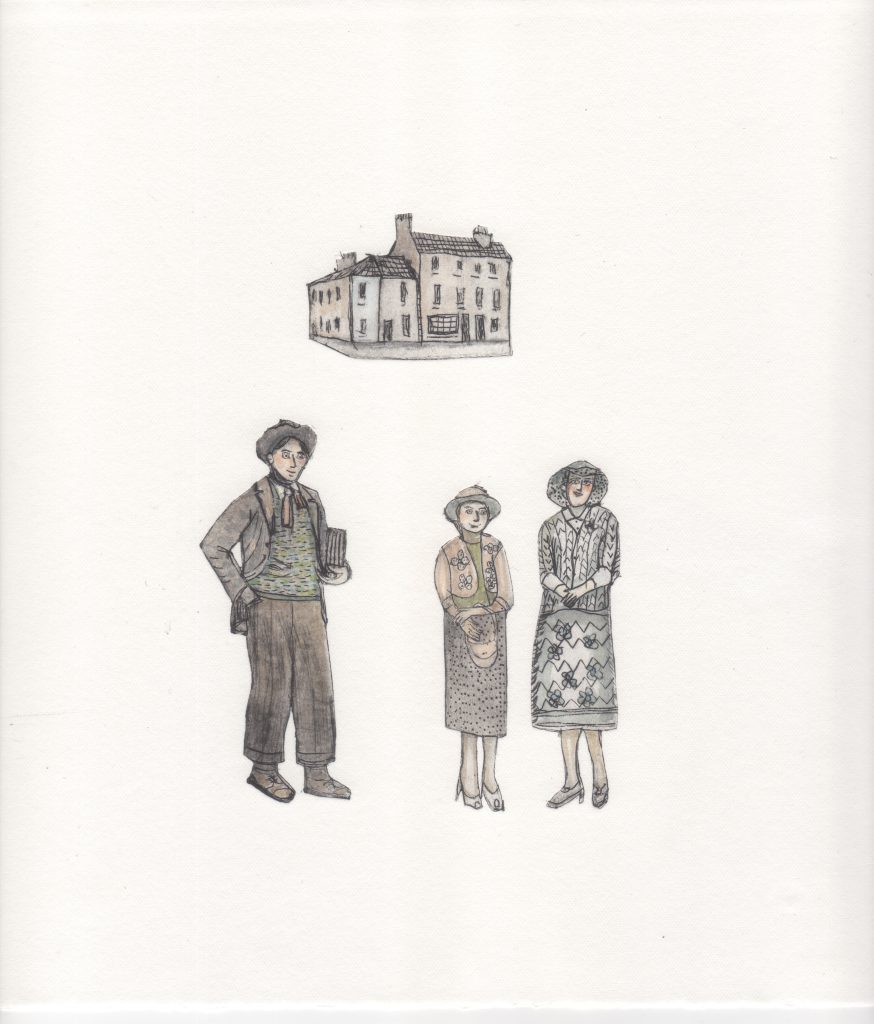
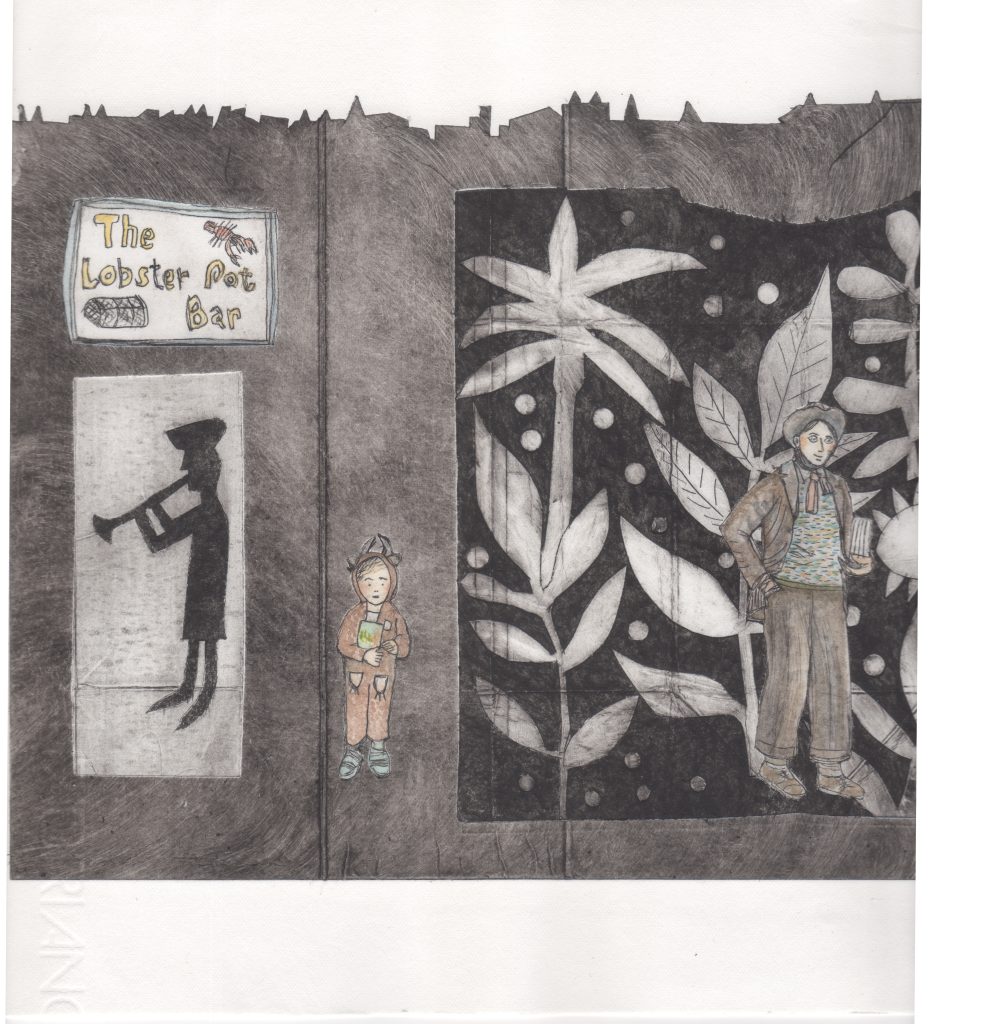
The Galway statue by Kirsipuu is an identical twin of the statue in Tartu, Estonia, which stands outside the site of the former Mattiesen printing house, once home to the University of Tartu’s printing press. While looking for images of the Tartu statue, I found photographs of people posing with it. These images inspired another imagined meeting: I brought some of the women pictured in Tartu to Galway. In one print, they watch street performers; in another, Ó Conaire shows them around the city, including the location of the Lobster Pot Bar, where he was born.
This led me to reflect on Ó Conaire’s early life and the fact that he was orphaned as a child. During one of our online meetings, we had discussed loss, innocence and childhood. I responded by drawing from a photograph of my grandson in fancy dress, holding his favourite book. In one of the prints and in the painting, a child carrying a book is paired with an image of Ó Conaire as an adult carrying books—a connection between childhood and adulthood, and between innocence and experience.
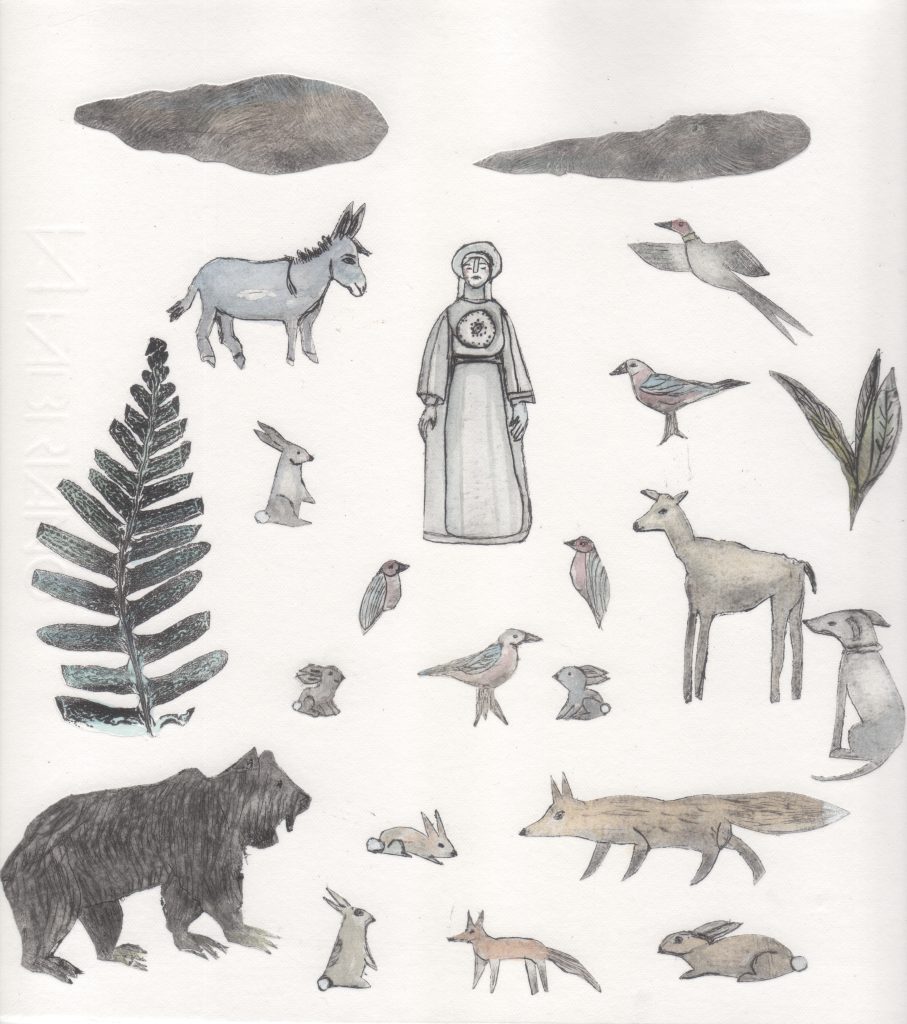
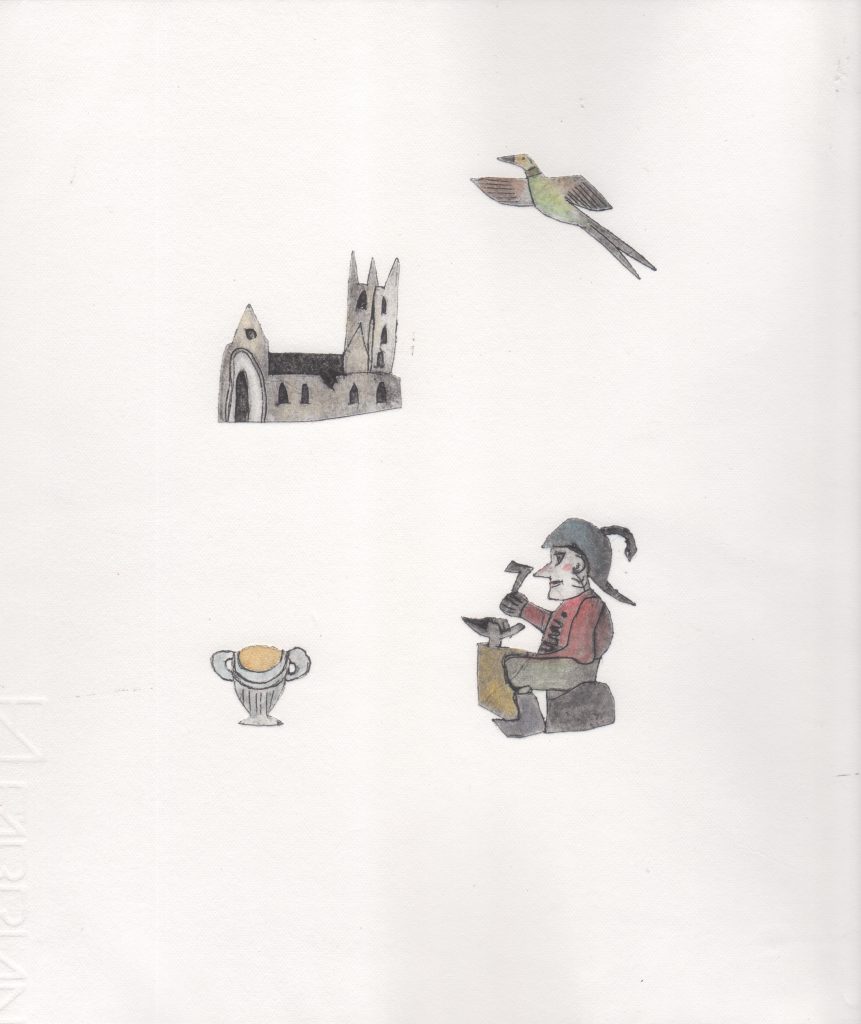
Children and woodland animals recur throughout the prints, reflecting the importance of animals in both Estonian and Irish folklore. Other images include the “singing mother” statue from Obinitsa, surrounded by animals from folk tales and legends. One print features a leprechaun, a pot of gold and a pheasant, recalling the stories my grandfather told us when we were children.
Another print draws on the statue of Raftery by Dónal Ó Murchadha and imagines a further meeting—perhaps with Máire Ní Eidhin…
I wanted the painting to have a fairytale quality while drawing on images and themes from Kristina’s poem: borders of danger, boats, poets, a flaming circus hoop, footprints, meetings and friendships, as well as the importance of language, history and identity, and the experience of vulnerability.
The painting brings together Ó Conaire, Raftery, the statues of Wilde and Vilde, the child and visiting women, street entertainers, musicians and dancers. They share the scene with the little black donkey, rabbits, birds, swans, a fox, the singing mother statue and a Galway Hooker. I also depict the ship Victory, which in 1949 unexpectedly landed in Ireland while carrying several hundred refugees, mainly Estonian, from Sweden to Canada. Above the ship, tongues of fire evoke Heaney’s “gift of tongues”; other fires recall ancient traditions, the Beacons at Bealtaine and the idea of refuge.
I titled the painting Is There Anywhere in the World?, after the opening of a line in Kristina’s poem: “Is there anywhere in the world where fear hasn’t extended its tentacles yet?”