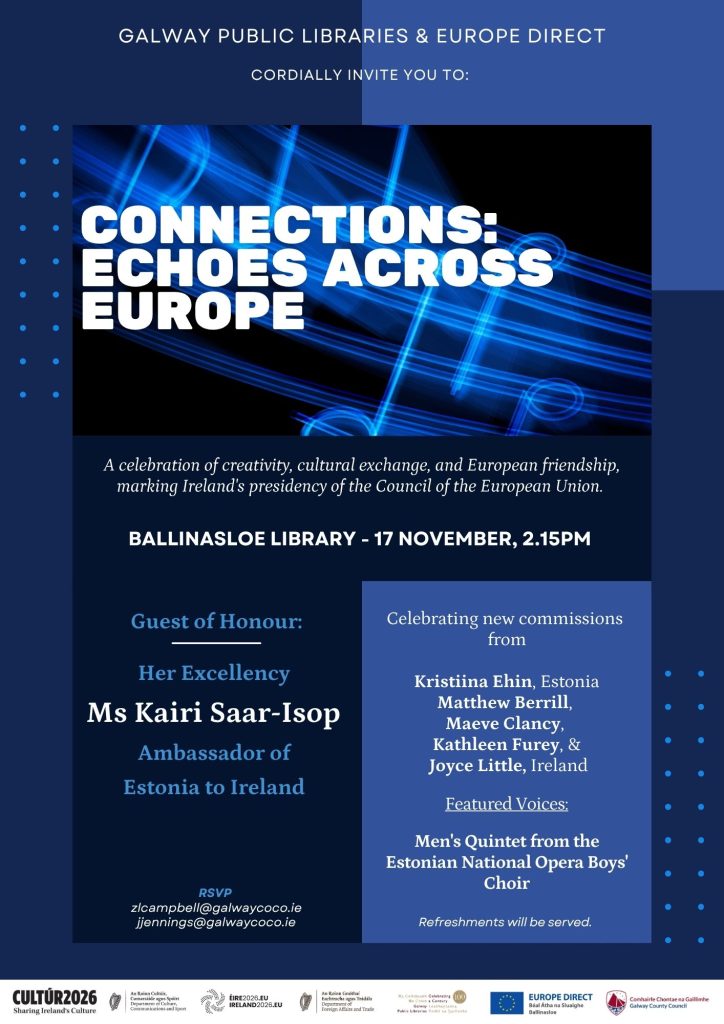
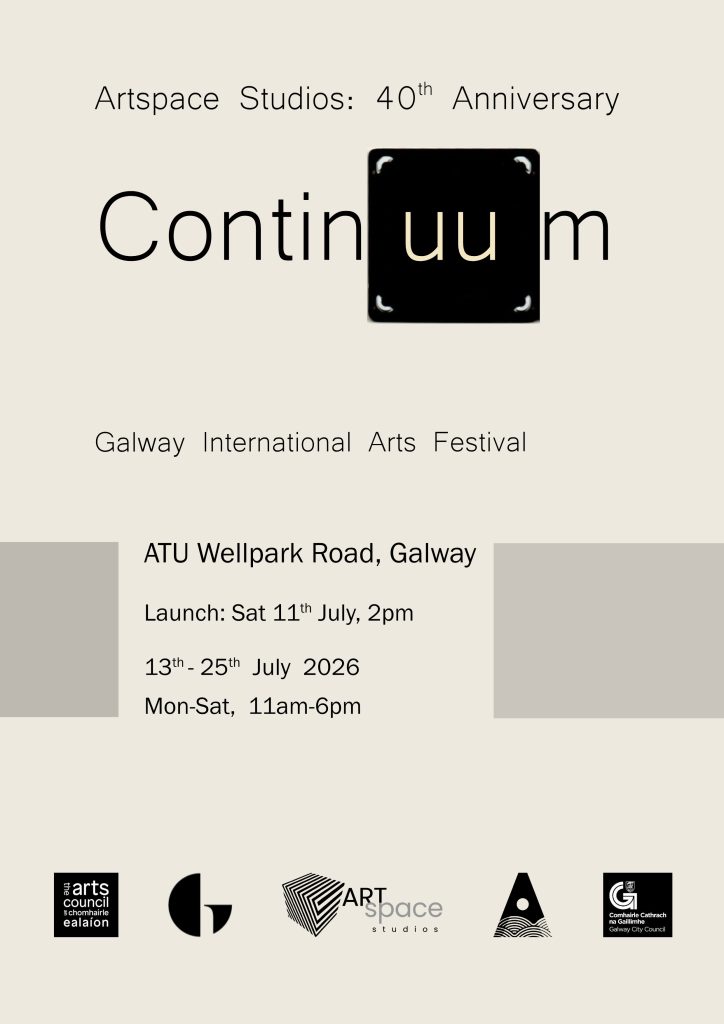
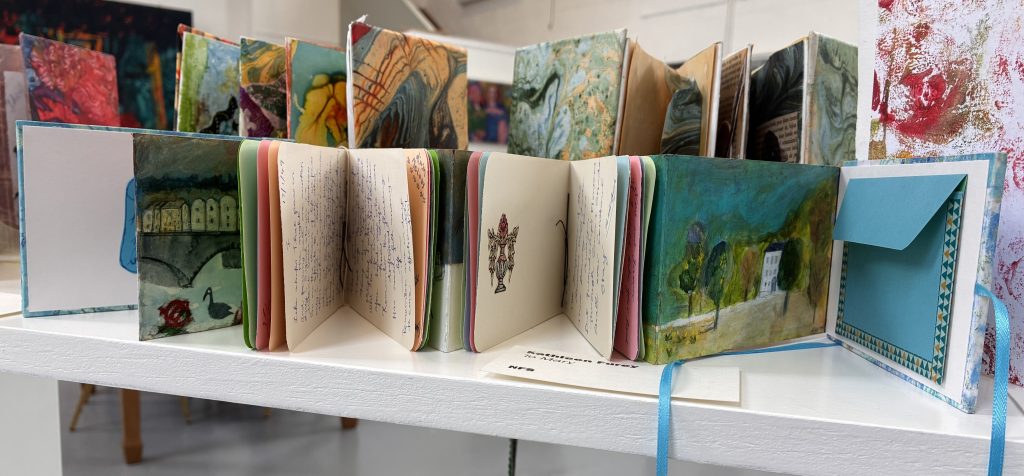
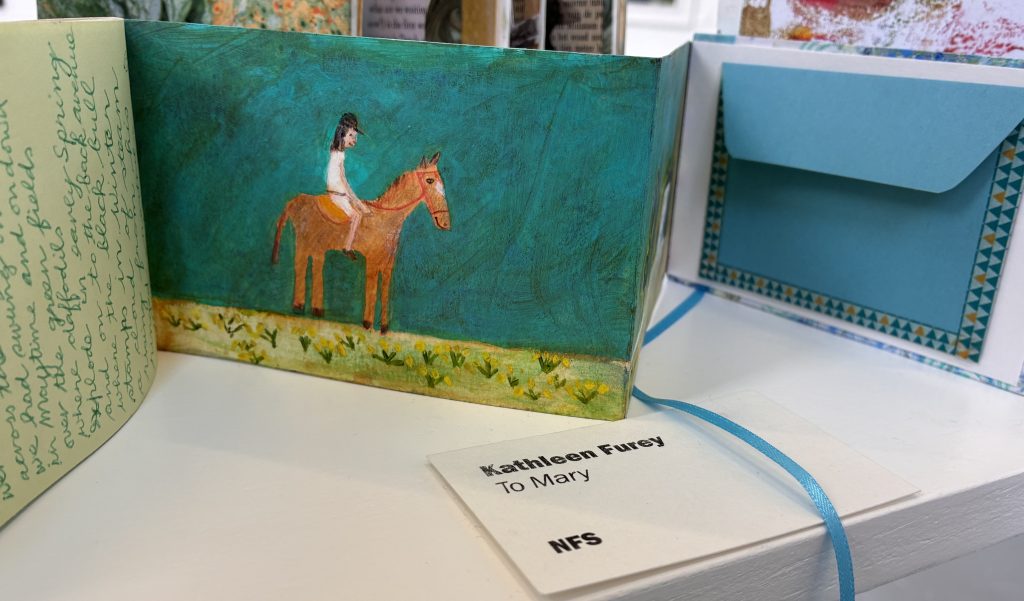
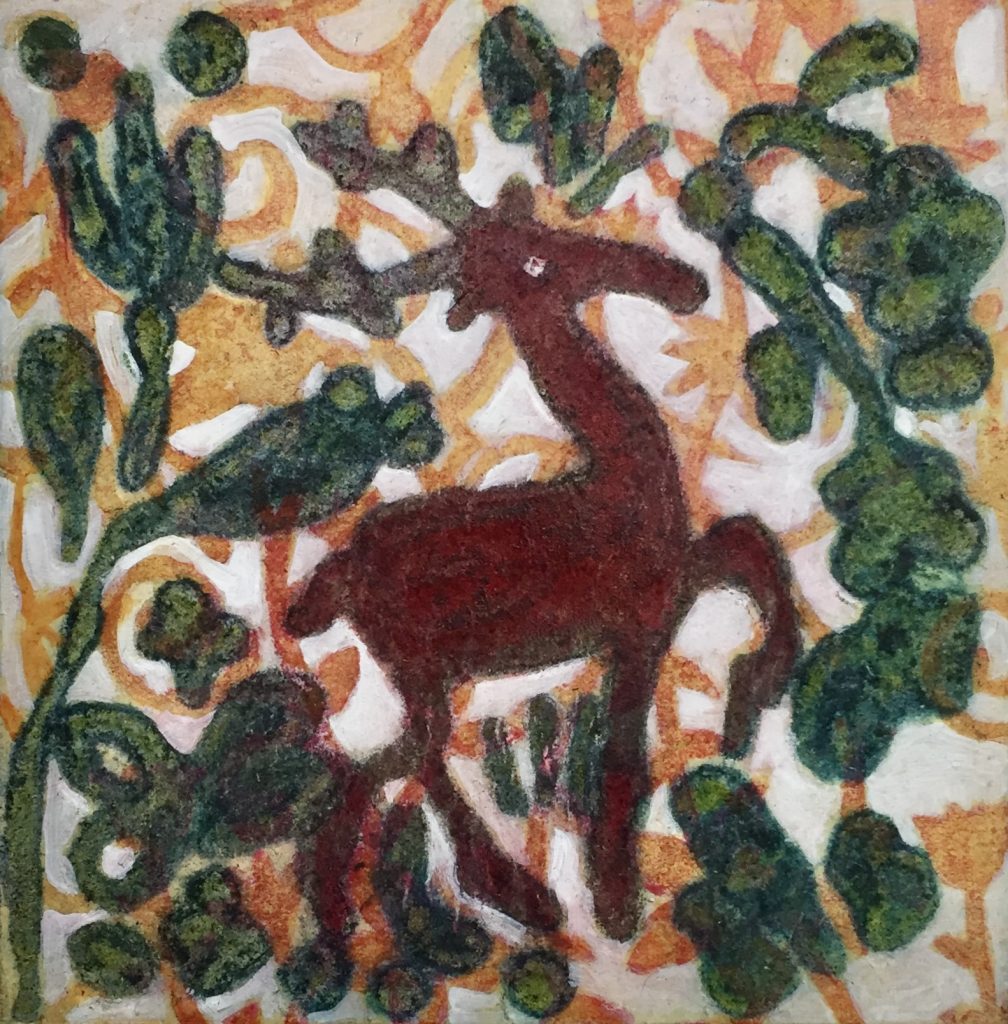
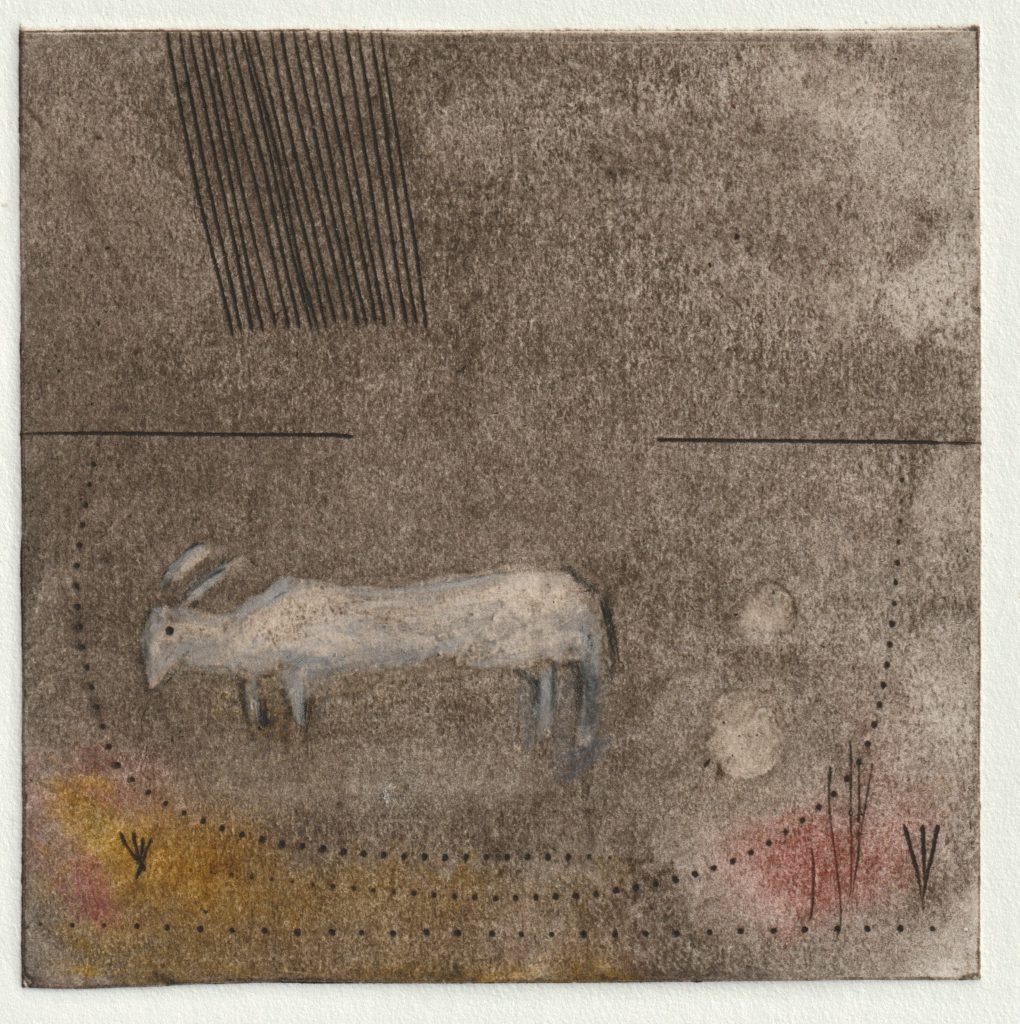
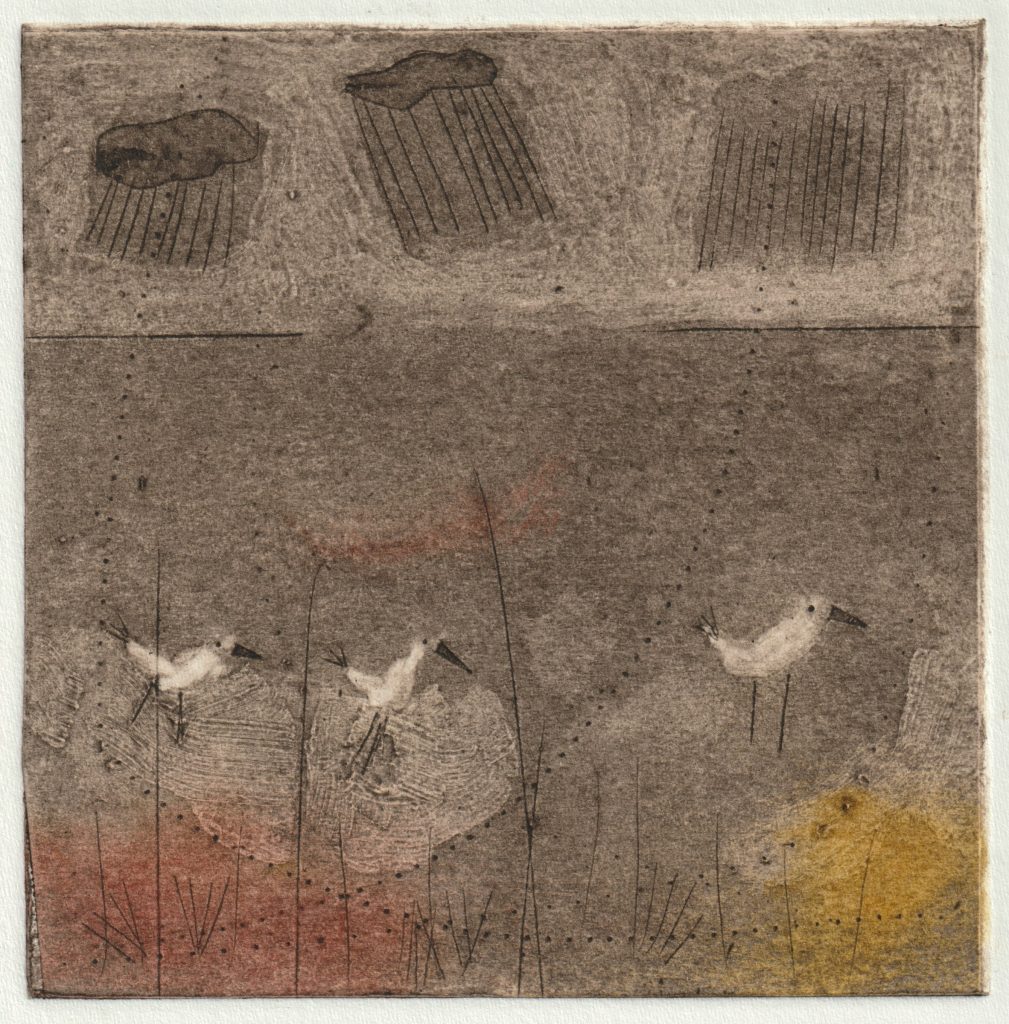
Connections : Echos Across Europe, an EU Presidency project celebrating the cultural connections and shared values between Ireland and Estonia. Ballinasloe Library 17 – 27th November, 2026

Celebrating new commissions from
Kristiina Ehin, Estonia, Matthew Berrill, Maeve Clancy, Kathleen Furey, & Joyce Little, Ireland
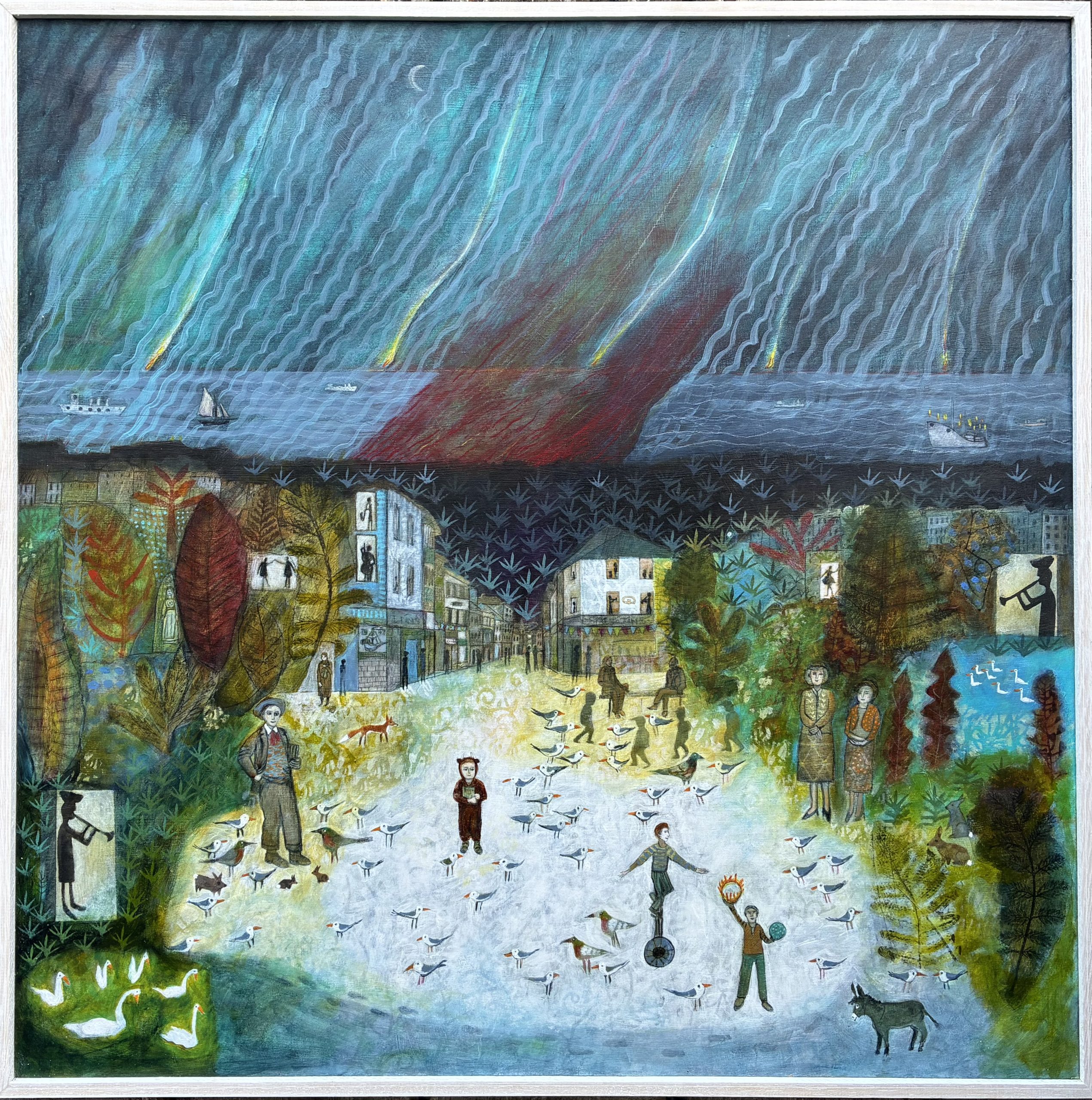
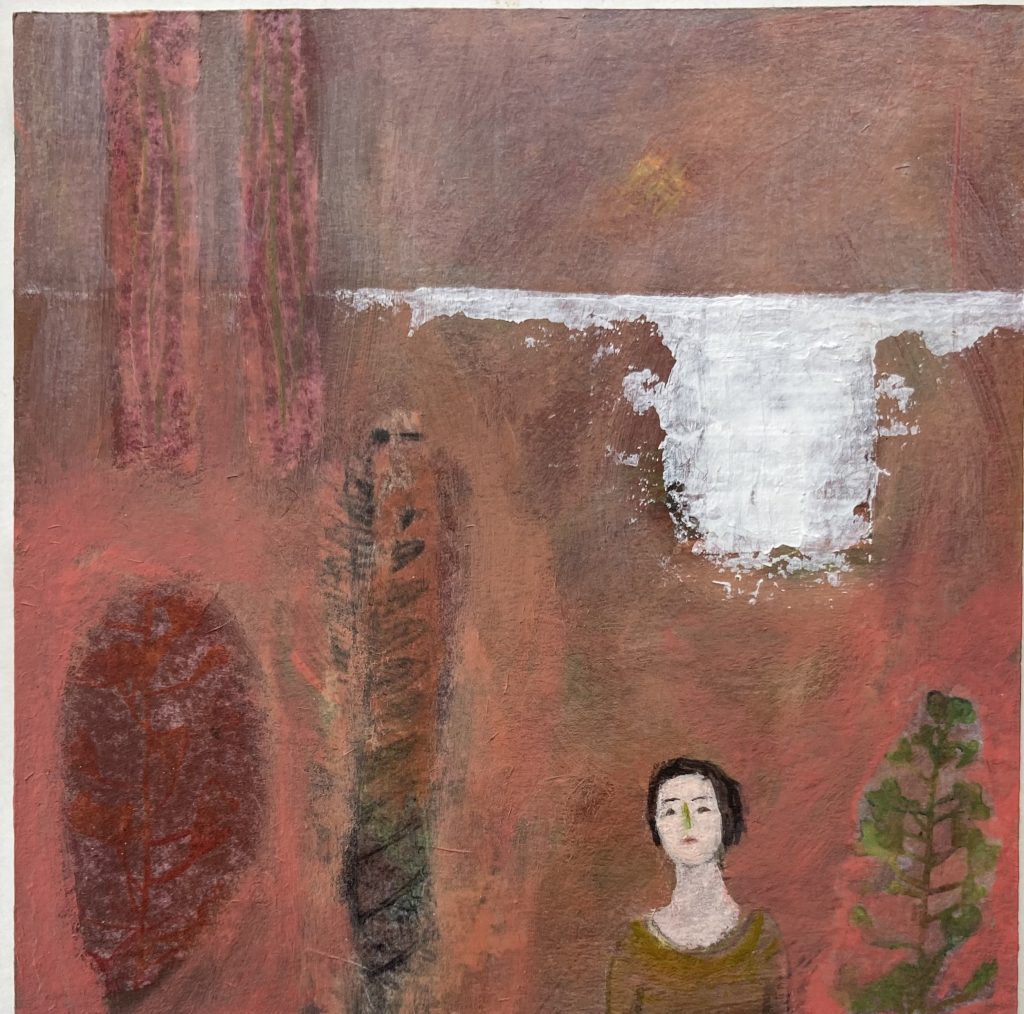
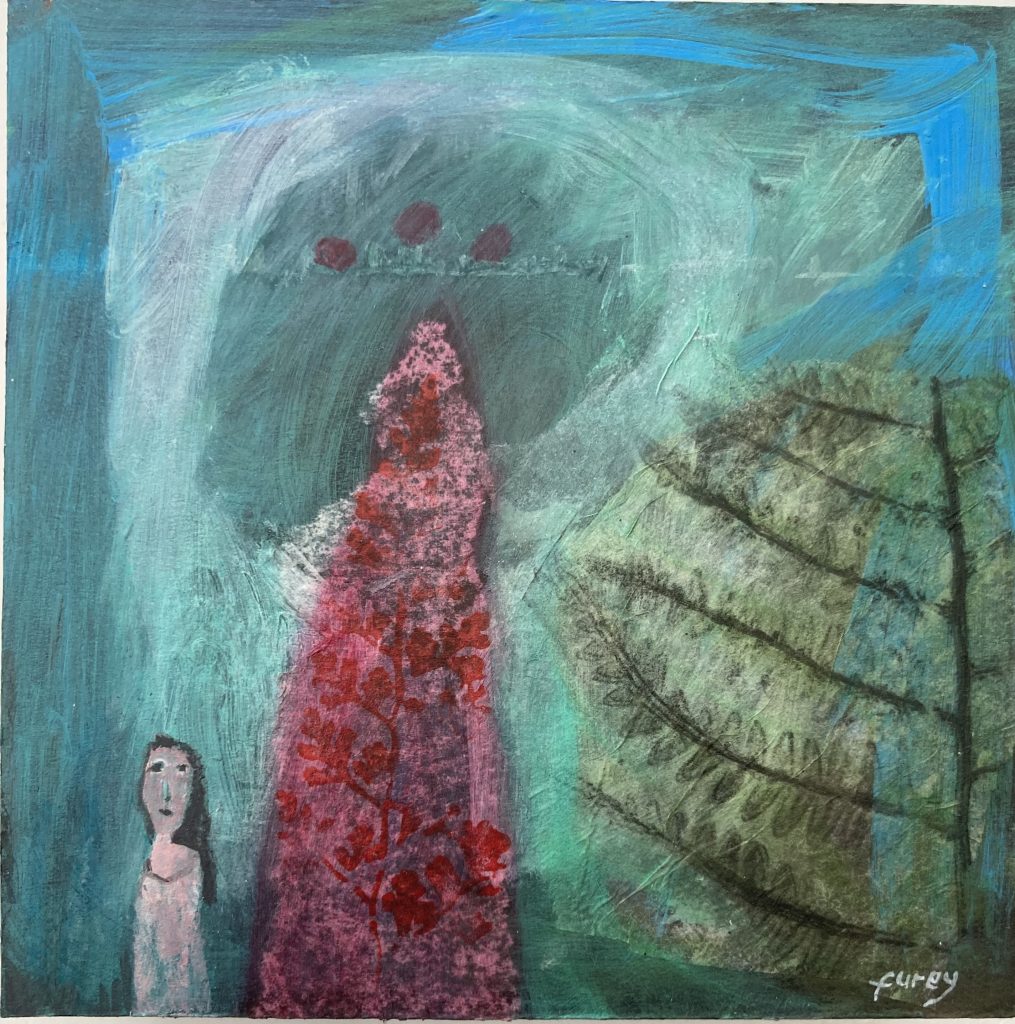
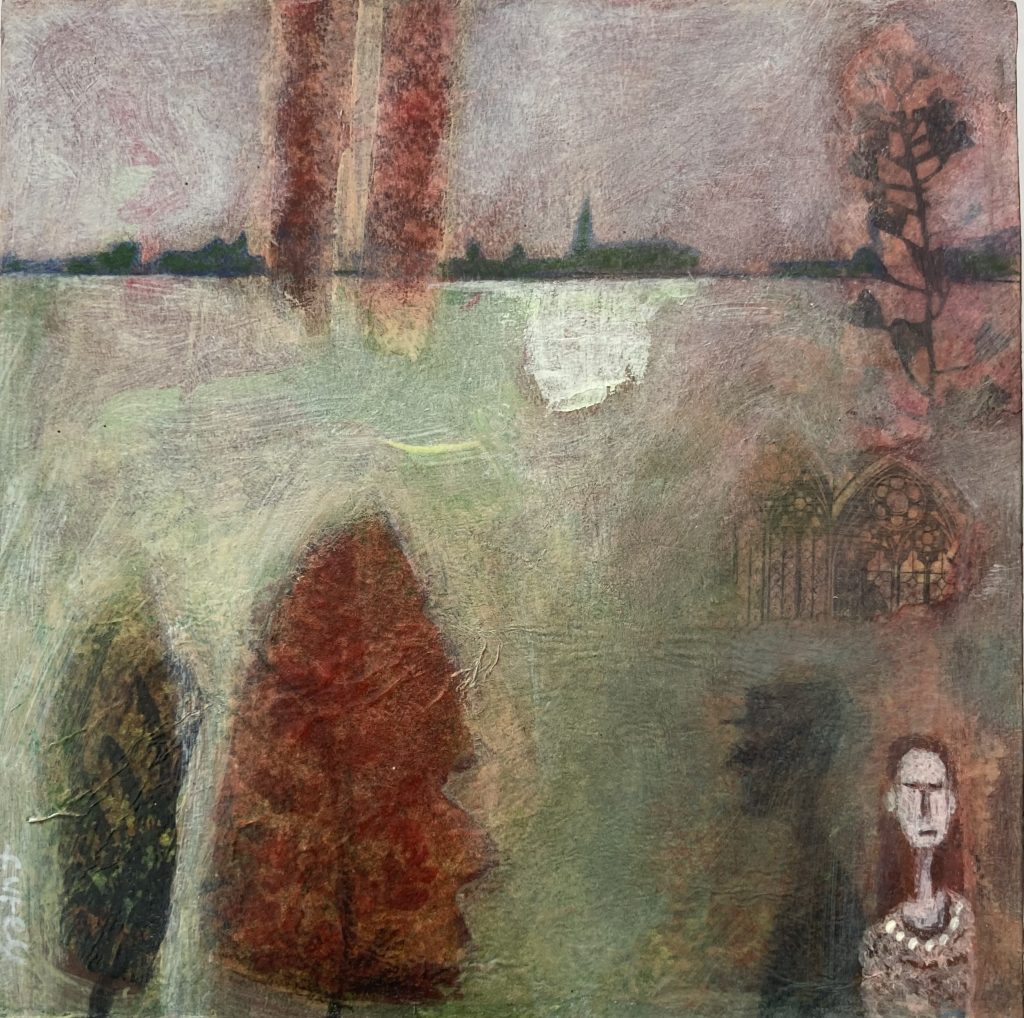
Kathleen Furey, Is there anywhere in the world? (mixed media on board, 60x60cm)

Kathleen Furey, Imaginary Meetings: Seeking Common Ground 2026

My initial idea for this project centred on two works connecting Galway and Estonia: the statue gifted to Galway by the people of Estonia in 2004 to mark Estonia’s accession to the European Union, and Seamus Heaney’s poem Beacons at Bealtaine, commissioned for The Day of Welcomes (Lá na bhFáilte) to mark the occasion.

During conversations with the other artists, we explored motherhood, nature, music, dance, language and identity. Ideas and phrases that stayed with me included symbolic lyricism, childhood innocence, folklore, fairytales, humour, life stories and “small stories”—the everyday experiences that help us find common ground. Kristiina Ehin sent us her poem “Seeking Common Ground”

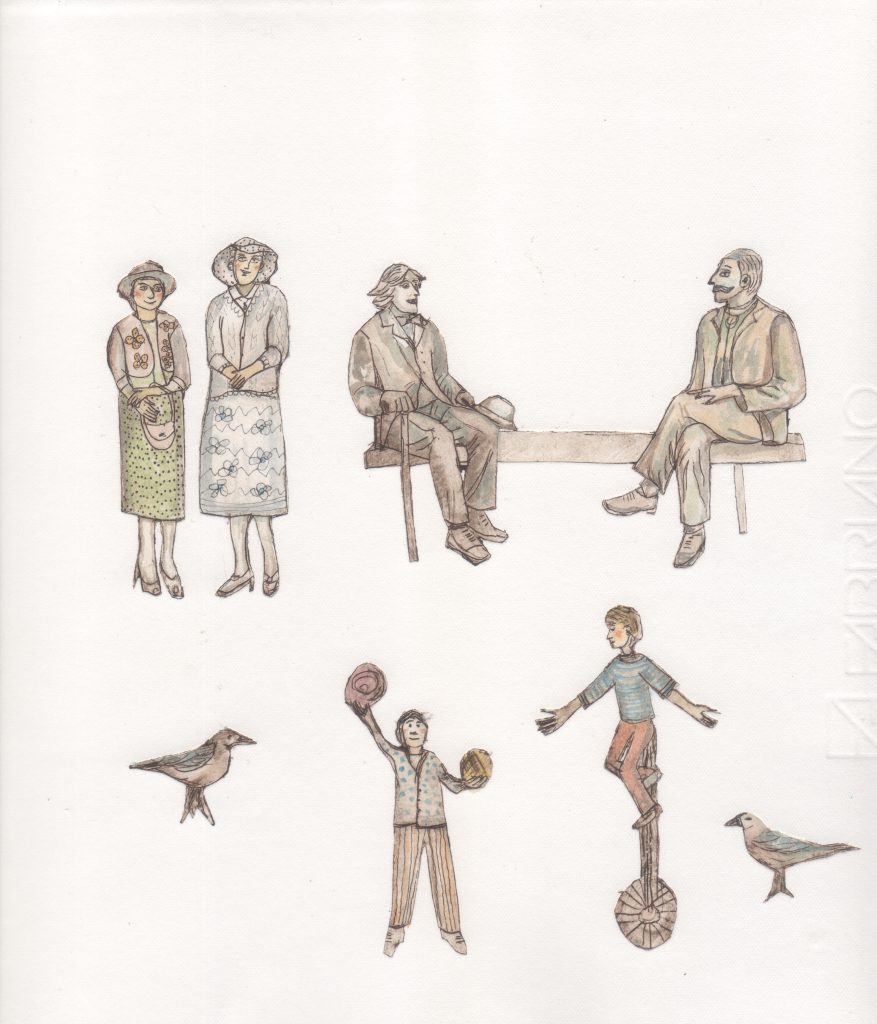
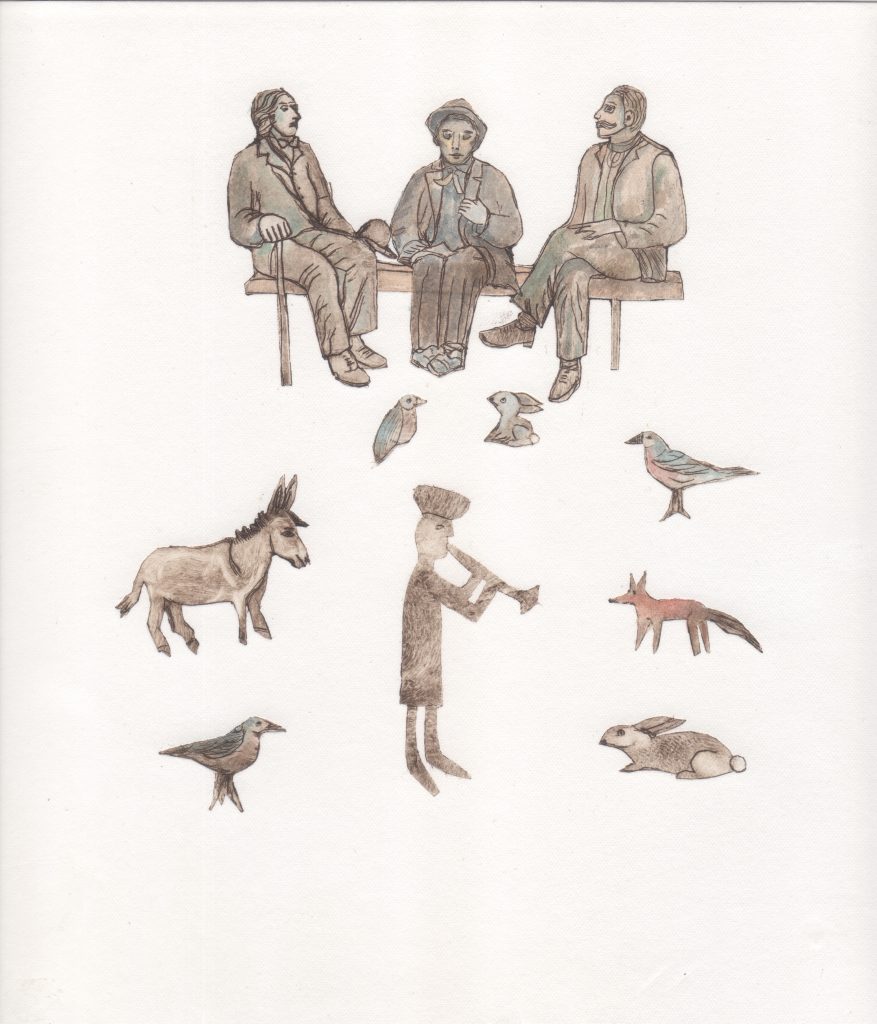
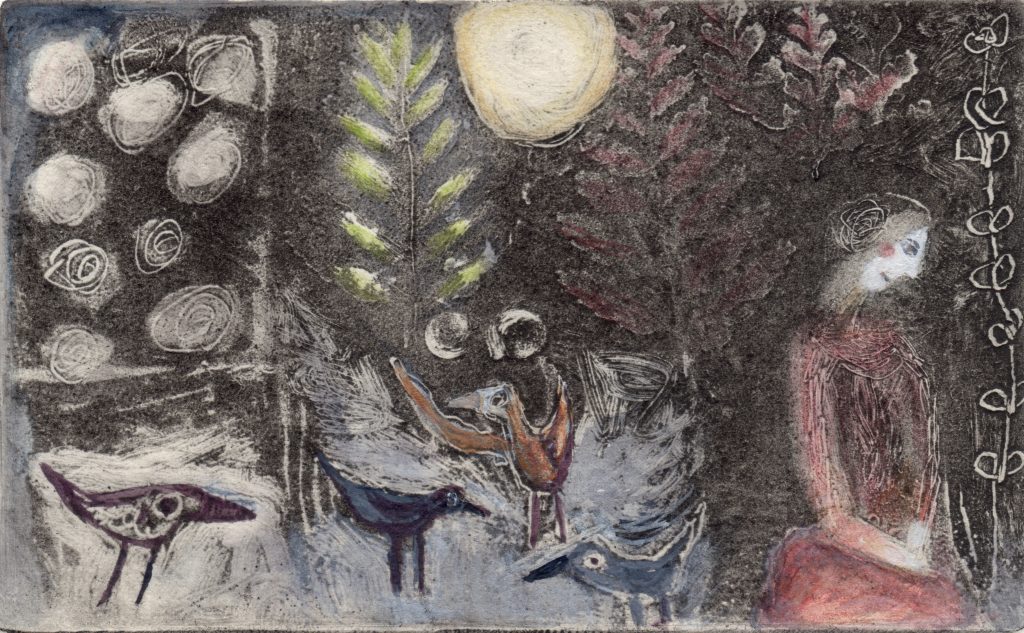
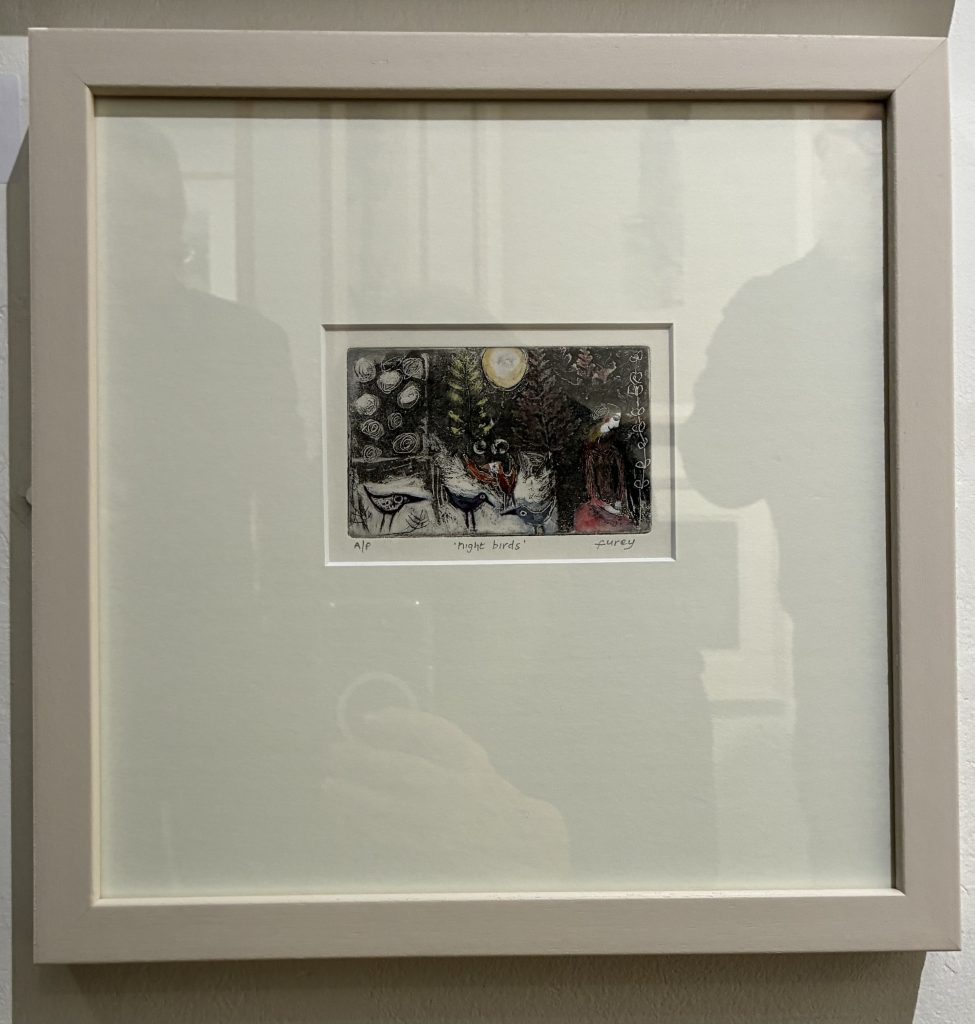
For my drypoint prints, I returned to the two poets, Oscar Wilde and Eduard Vilde, and imagined them meeting on the bench created by Estonian artist Tiiu Kirsipuu. I then brought the Galway writer Pádraic Ó Conaire into this imagined encounter. A beloved figure in Galway and a strong advocate for the Irish language, Ó Conaire is regarded as a pioneer of modern Irish-language writing. His statue stood in Eyre Square throughout my childhood, and I remember visiting it when I lived in Galway. In one print, I picture him sitting with Wilde and Vilde, surrounded by animals and street entertainers.

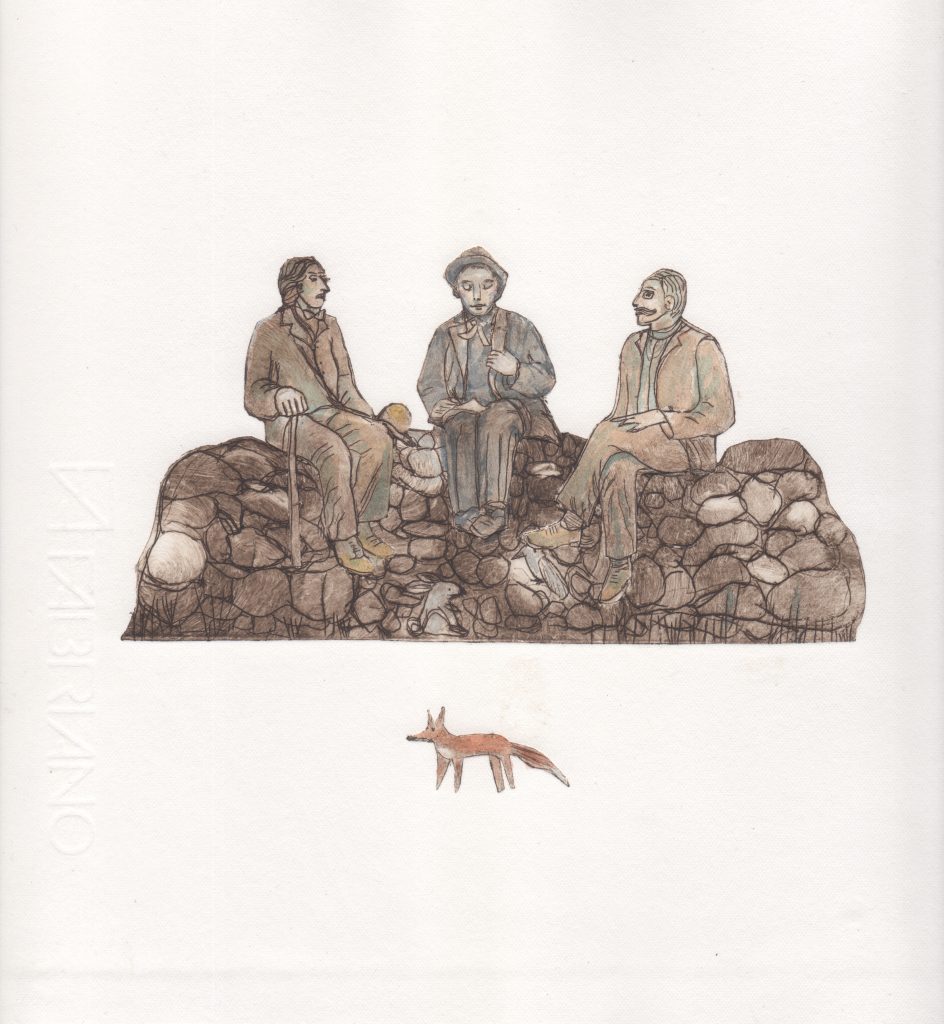
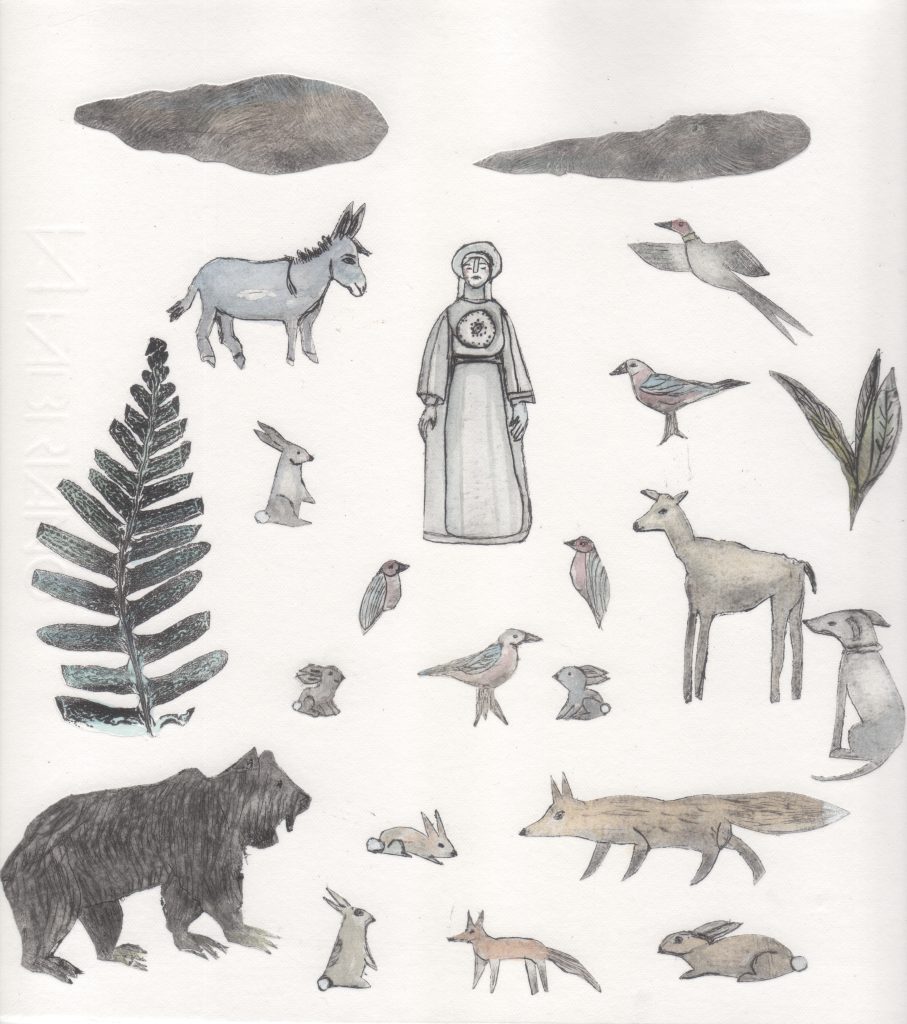
In another, Ó Conaire brings the poets to Connemara. They sit on a stone wall, echoing the pose of Ó Conaire’s statue in Galway by Albert Power. A small donkey from M’asal beag dubh, one of Ó Conaire’s best-loved stories, joins them, a fox is present in another.

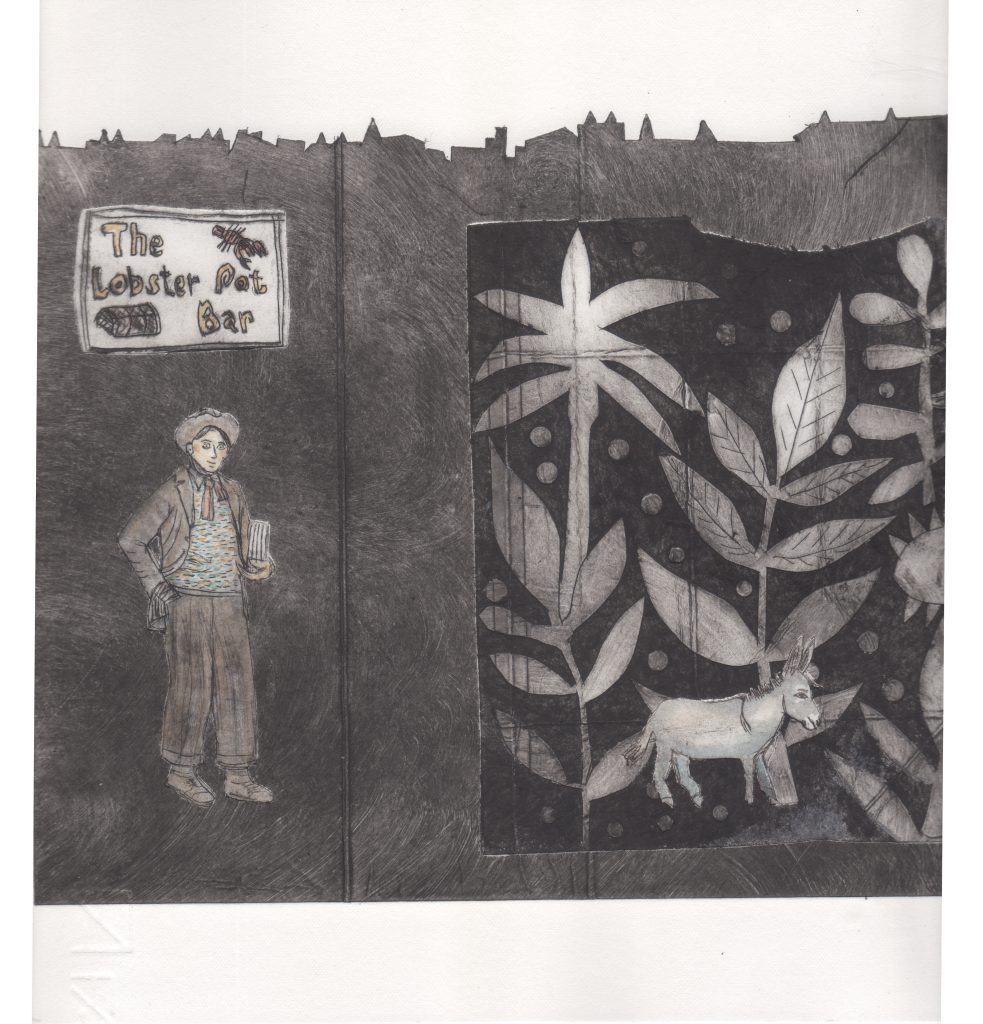
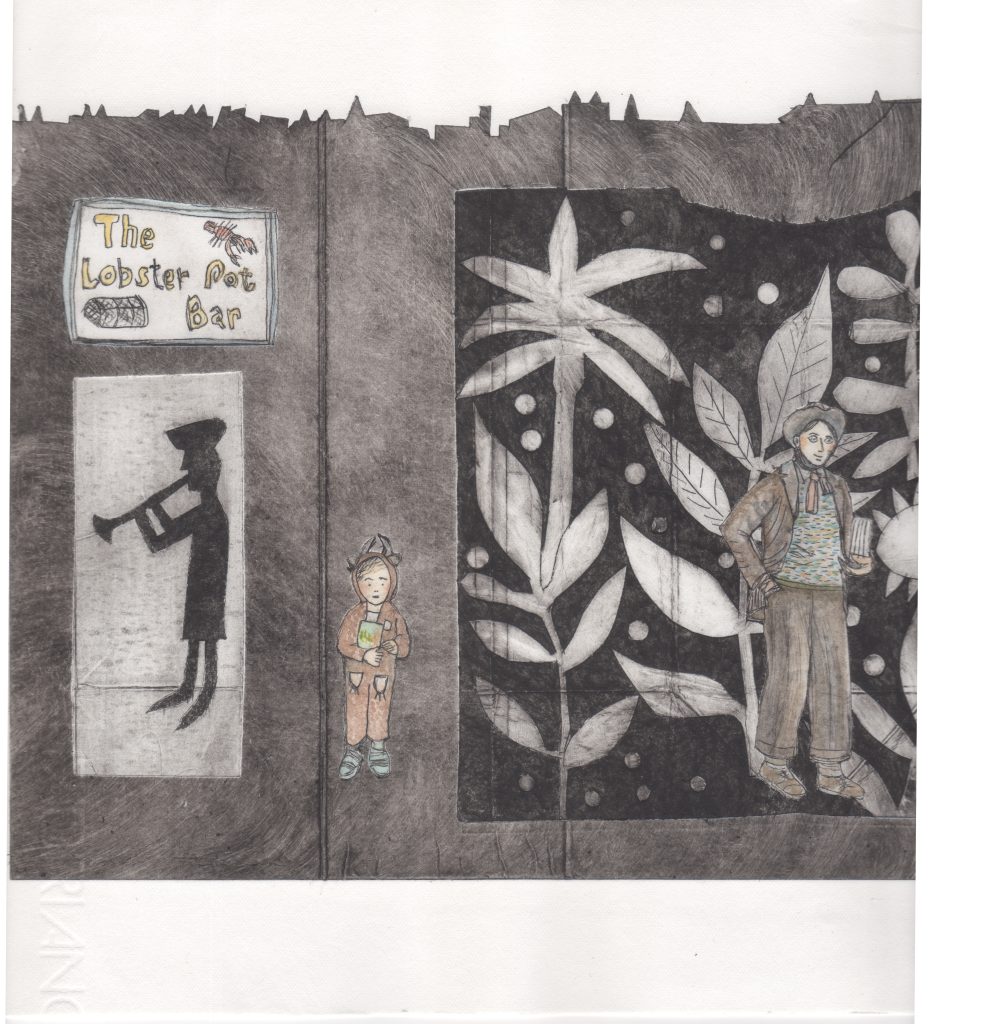
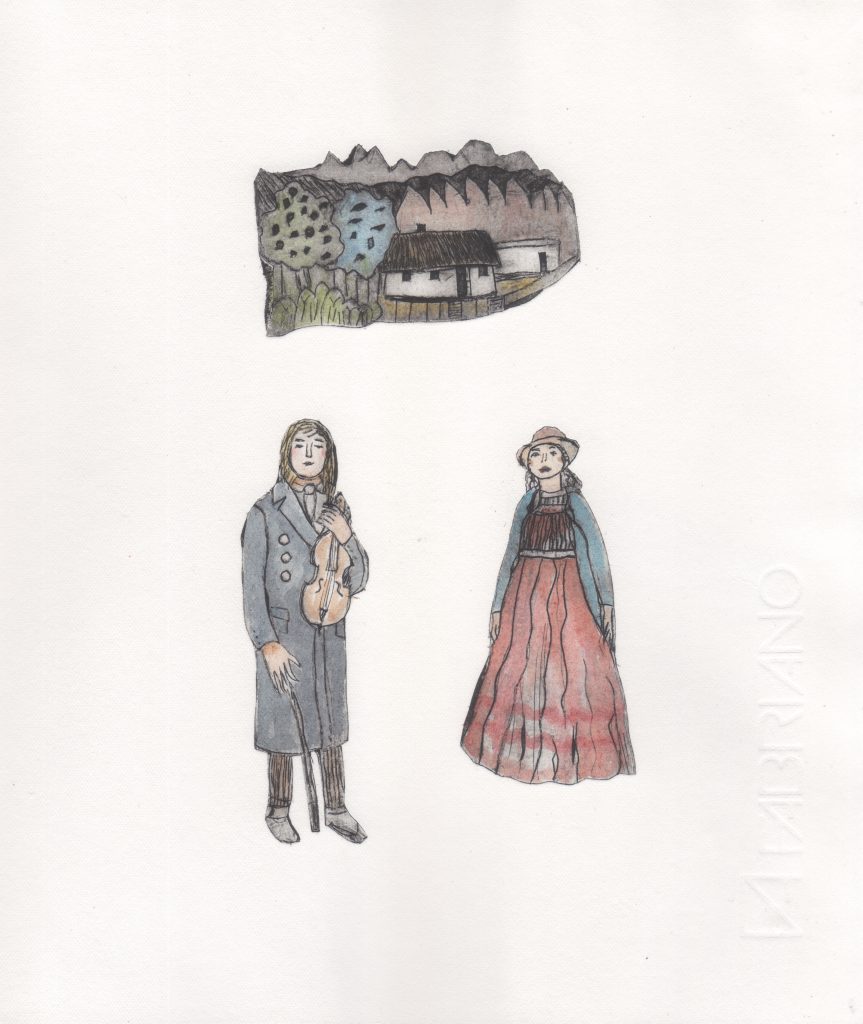
The Galway statue by Kirsipuu is an identical twin of the statue in Tartu, Estonia, which stands outside the site of the former Mattiesen printing house, once home to the University of Tartu’s printing press. While looking for images of the Tartu statue, I found photographs of people posing with it. These images inspired another imagined meeting: I brought some of the women pictured in Tartu to Galway. In one print, they watch street performers; in another, Ó Conaire shows them around the city, including the location of the Lobster Pot Bar, where he was born.

This led me to reflect on Ó Conaire’s early life and the fact that he was orphaned as a child. During one of our online meetings, we had discussed loss, innocence and childhood. I responded by drawing from a photograph of my grandson in fancy dress, holding his favourite book. In one of the prints and in the painting, a child carrying a book is paired with an image of Ó Conaire as an adult carrying books—a connection between childhood and adulthood, and between innocence and experience.

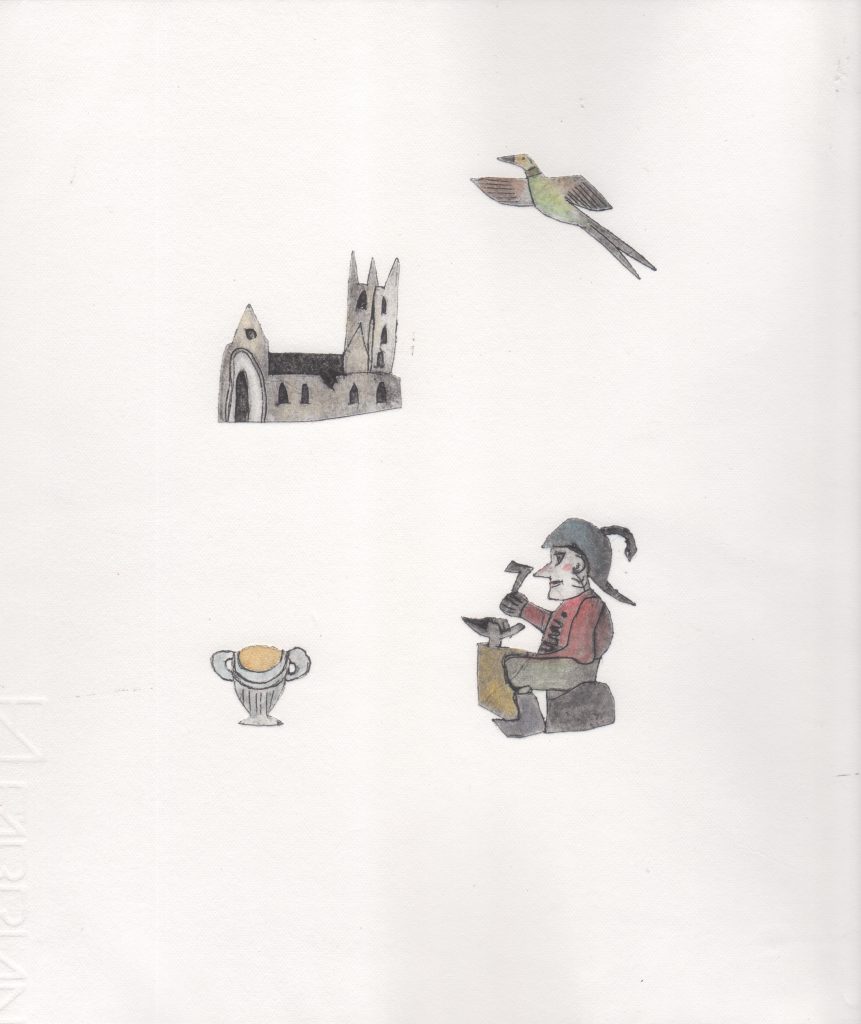
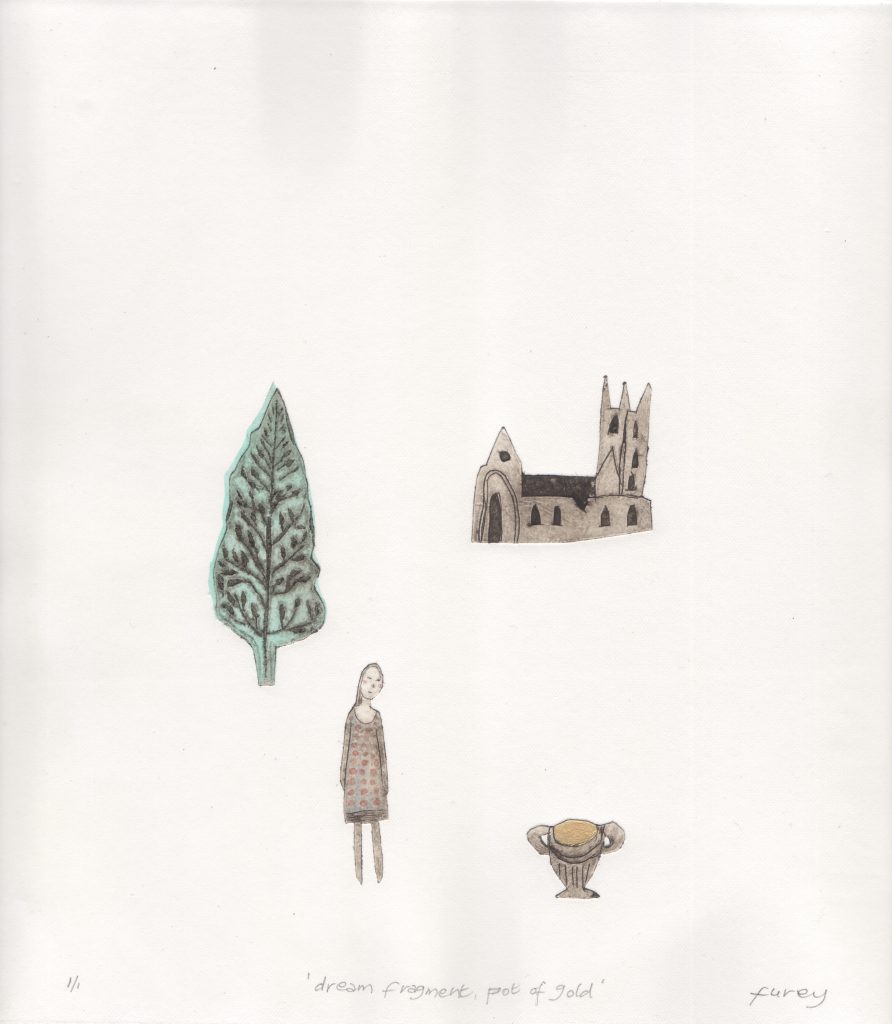
Children and woodland animals recur throughout the prints, reflecting the importance of animals in both Estonian and Irish folklore. Other images include the “singing mother” statue from Obinitsa, surrounded by animals from folk tales and legends. One print features a leprechaun, a pot of gold and a pheasant, recalling the stories my grandfather told us when we were children.

Another print draws on the statue of Raftery by Dónal Ó Murchadha and imagines a further meeting—perhaps with Máire Ní Eidhin…

I wanted the painting to have a fairytale quality while drawing on images and themes from Kristina’s poem: borders of danger, boats, poets, a flaming circus hoop, footprints, meetings and friendships, as well as the importance of language, history and identity, and the experience of vulnerability.

The painting brings together Ó Conaire, Raftery, the statues of Wilde and Vilde, the child and visiting women, street entertainers, musicians and dancers. They share the scene with the little black donkey, rabbits, birds, swans, a fox, the singing mother statue and a Galway Hooker. I also depict the ship Victory, which in 1949 unexpectedly landed in Ireland while carrying several hundred refugees, mainly Estonian, from Sweden to Canada. Above the ship, tongues of fire evoke Heaney’s “gift of tongues”; other fires recall ancient traditions, the Beacons at Bealtaine and the idea of refuge.

I titled the painting Is There Anywhere in the World?, after the opening of a line in Kristina’s poem: “Is there anywhere in the world where fear hasn’t extended its tentacles yet?”
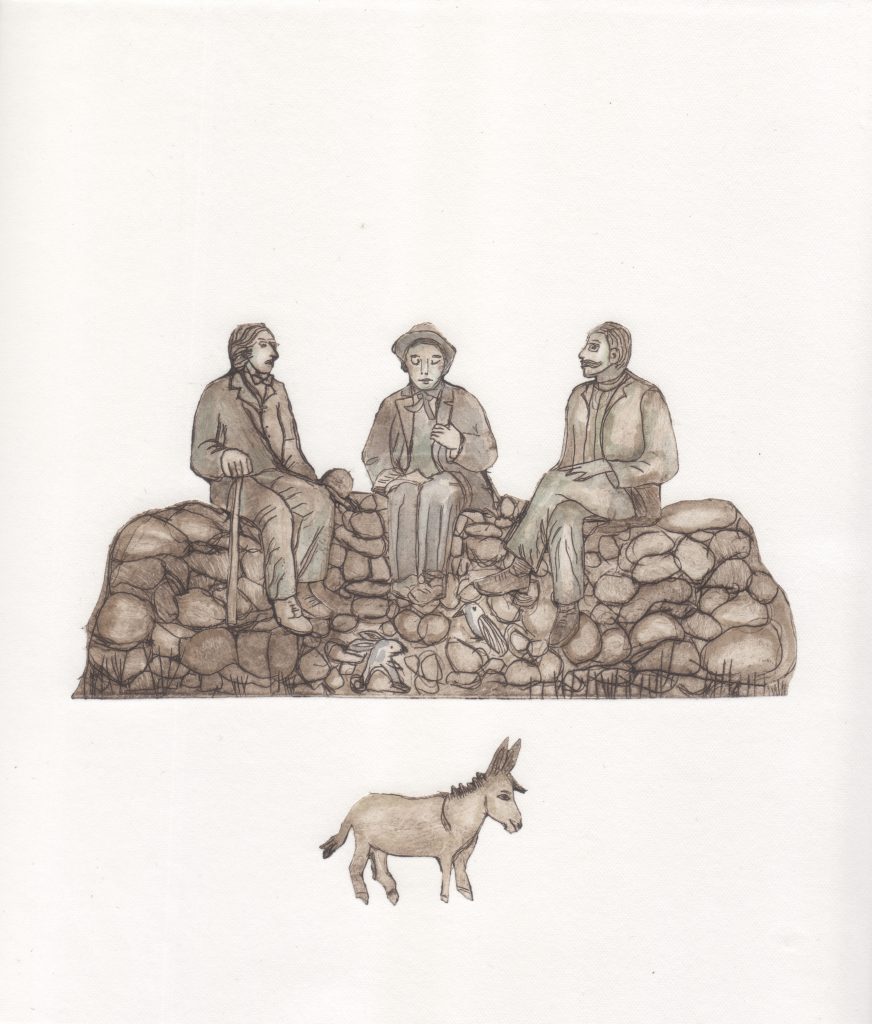
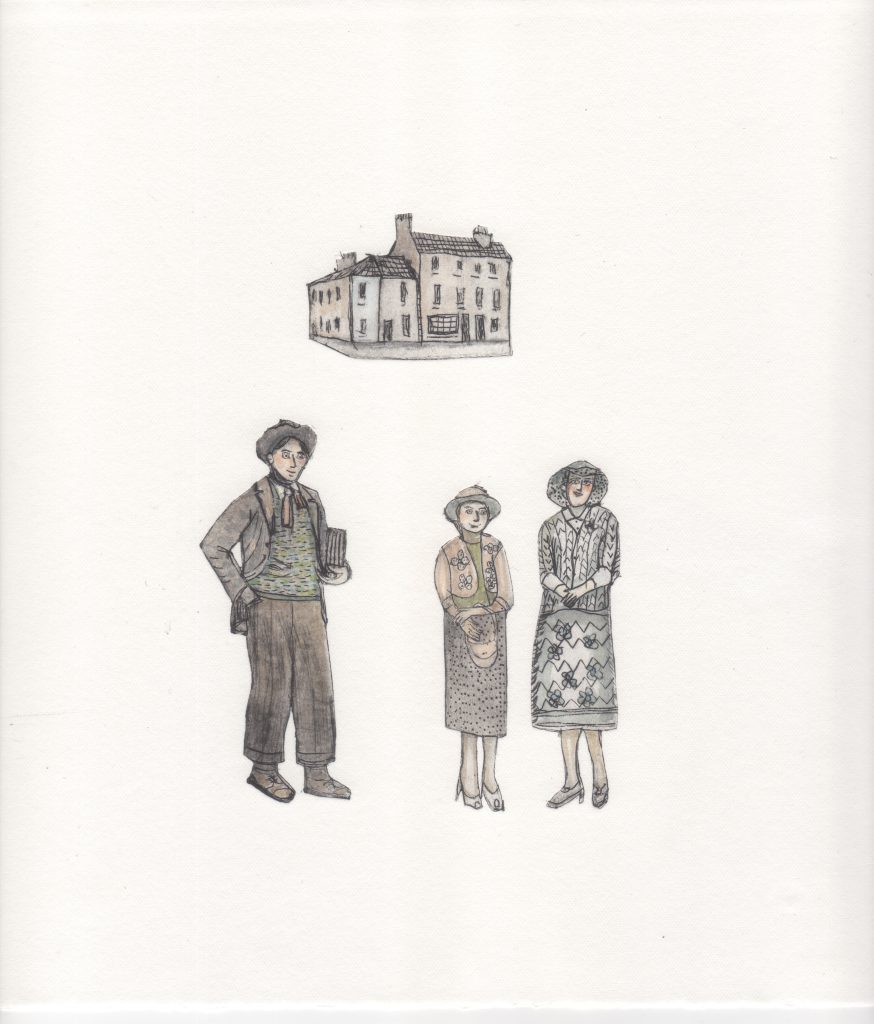
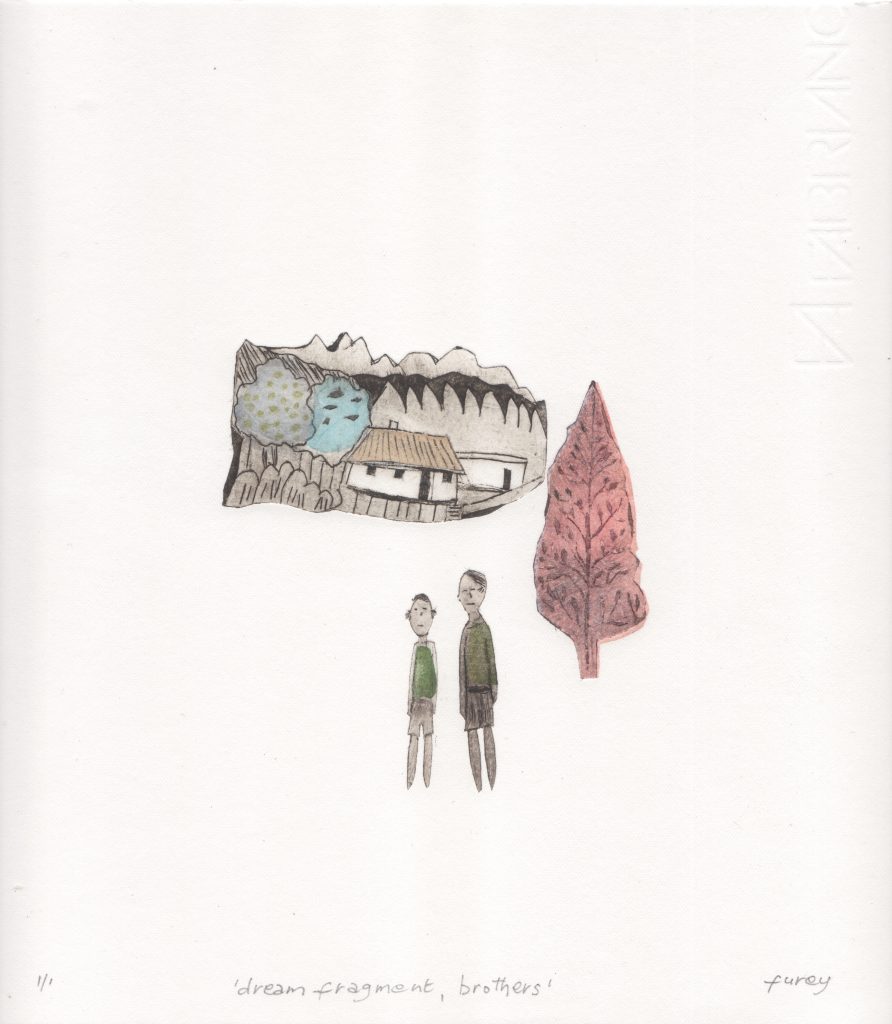
Kathleen Furey, M’Asal Beag Dubh, Hand coloured Drypoint Print 23cmx24cm
Kathleen Furey, Cairde Liom 1, Hand coloured Drypoint Print 23cmx24cm
Kathleen Furey, Uptown, Galway, 1, Hand coloured Drypoint Print 23cmx24cm
Kathleen Furey, Cairde Liom 2, Hand coloured Drypoint Print 23cmx24cm
Kathleen Furey, The Lobster Pot Bar 1, Hand coloured Drypoint Print 23cmx24cm
Kathleen Furey, Mé féin agus an Coinín 1, Hand coloured Drypoint Print 23cmx24cm
Kathleen Furey, The Lobster Pot Bar 2, Hand coloured Drypoint Print 23cmx24cm
Kathleen Furey, Amuigh faoin bhfásach 1, Hand coloured Drypoint Print 23cmx24cm
Kathleen Furey, Scéalta mo sheanathar 1, Hand coloured Drypoint Print 23cmx24cm
Kathleen Furey, Anois teacht an Earraigh 1, Hand coloured Drypoint Print 23cmx24cm

Threading the Threshold – Care, Craft and Celtic Revival

Delighted to exhibit work inspired by the Cuala Press and Harry Clarke and Augustus Nicholas Burke at this year’s Threshold Exhibition, more information from the Festival below:

“At the heart of this year’s Threshold Arts Festival, we not only celebrate the legacy of W. B. Yeats in drama, theatre, music, and poetry—we also honor the creative world of his sisters, Lily and Lollie Yeats, whose devotion to craft, design, and making helped shape the Irish cultural revival in material form.

Running alongside the festival (30 July–2 August 2026) at Notre Dame Kylemore, one of two University of Notre Dame academic centres in Ireland, “Threading the Threshold” is a special visual-arts component bringing together local and international artists working across multiple media—echoing the range and ambition of the Yeats sisters’ own practices in embroidery, bookmaking, and print.
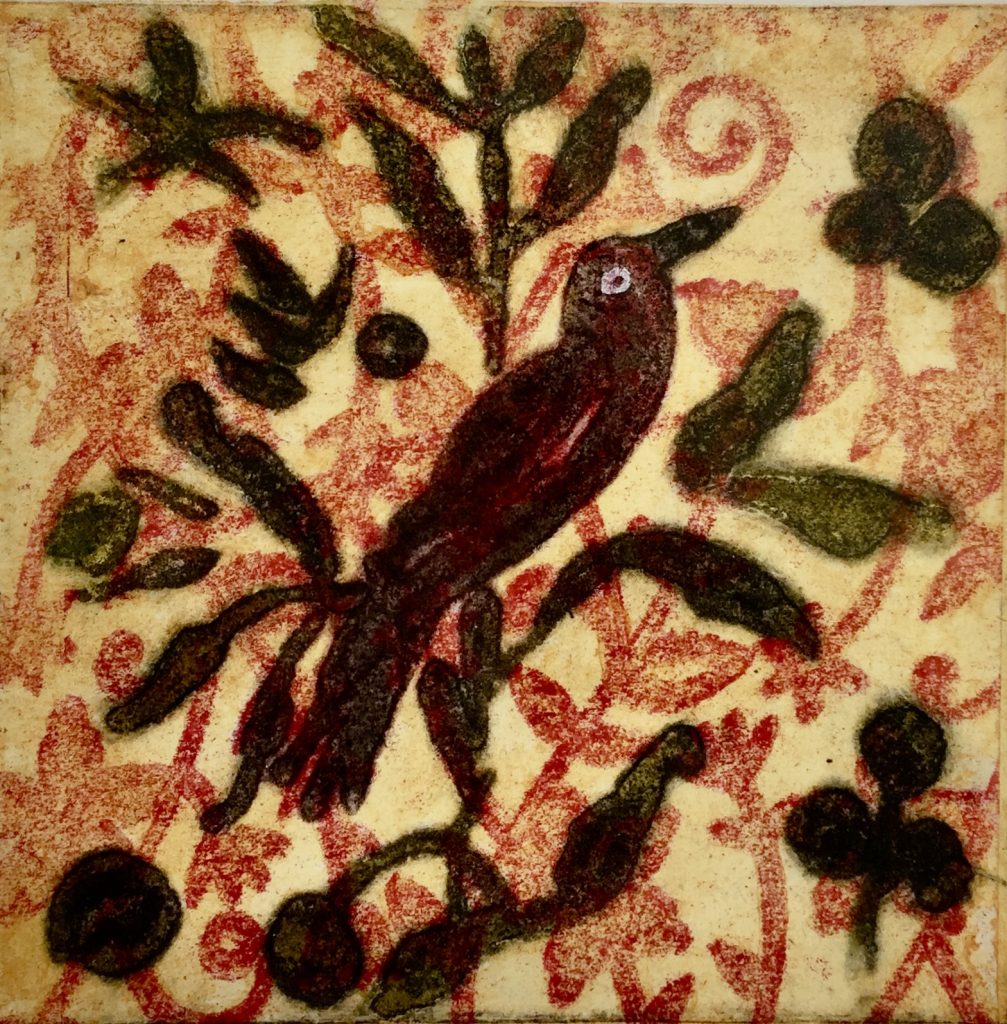
The exhibition will explore how care and craft can carry culture and how skills passed hand-to-hand—stitch, press, pigment, fibre, image—become a living language of memory and renewal. ND Kylemore invites visitors to encounter contemporary work that engages (directly or indirectly) with the Yeats sisters’ legacy: the dignity of making, the discipline of craft, and the quiet power of objects made with attention.“

https://kylemore.nd.edu/outreach-and-engagement/the-arts-at-kylemore/threshold-arts-festival/threshold-arts-festival-2026-art-exhibition/

The Mountains are Calling, WBN, UWE, Bristol

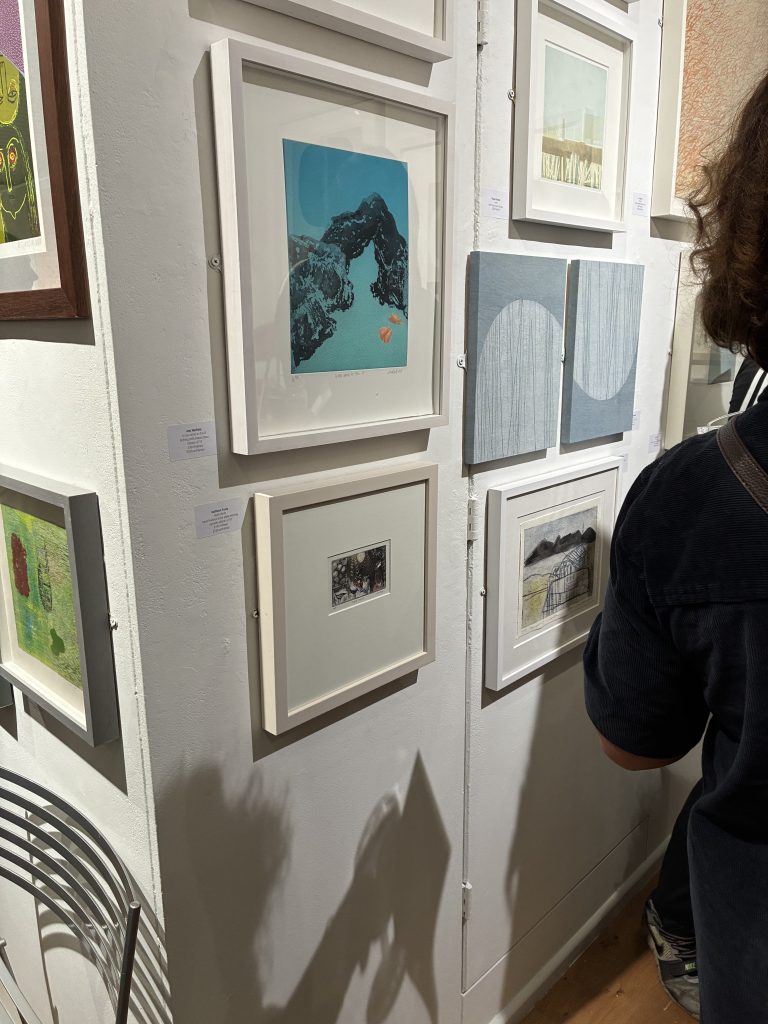
My contributions to ‘The Mountains are Calling’ an exhibition for World Book Night currently on display at Bower Ashton Library, UWE, Bristol, UK until 31st July 2026

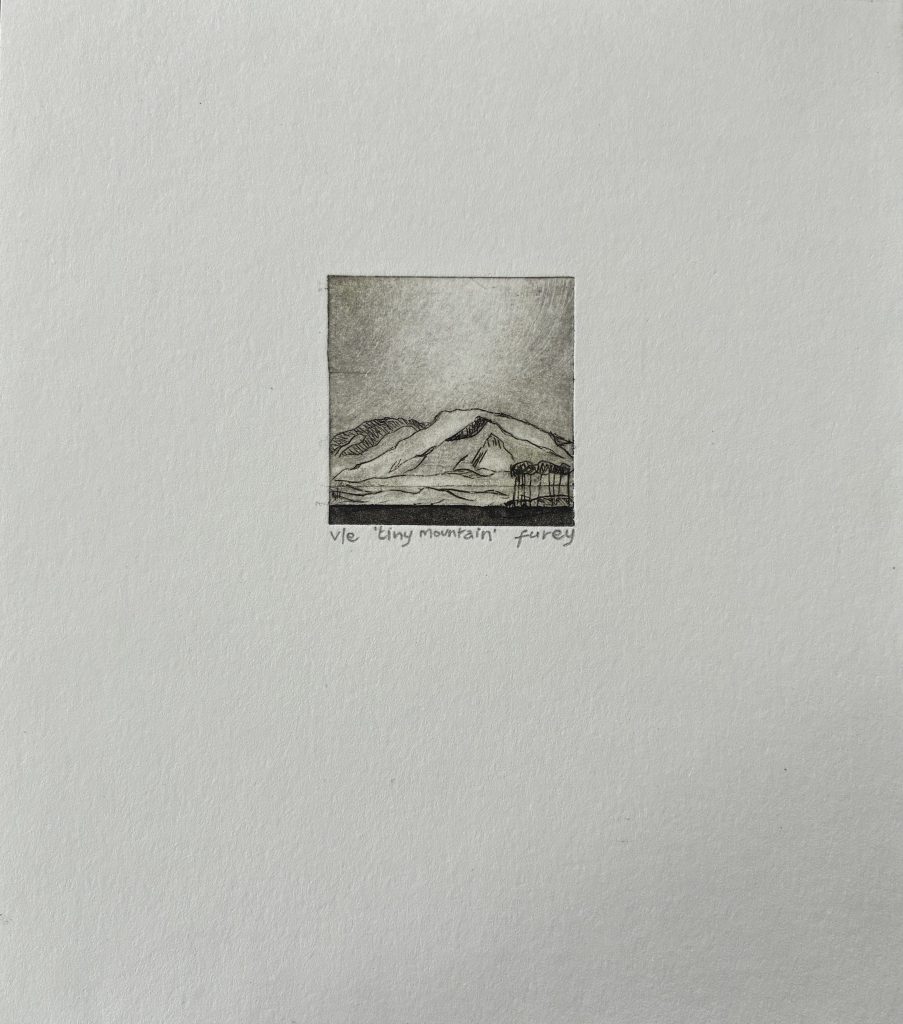
Tiny Mountain

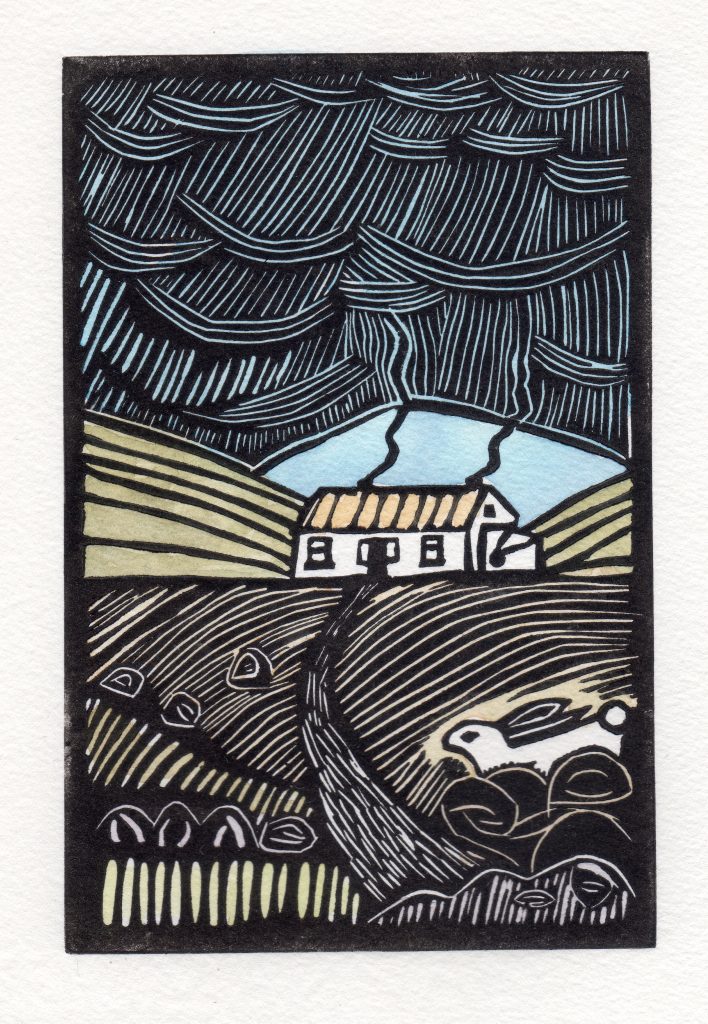
The title of the print ‘Tiny Mountain’ is a fragment of a song lyric referencing mountains in Connemara which ‘failed to charm’ a visitor from a country with taller mountains. The writer longs to be away from the city and return to a simpler existence, spending time on the mountain. He says he has always liked the mountains and comments that ‘neither one of us expects the other to be charming’.

Tiny Mountain
Paddy Conneely

These hills once failed to charm
A wandering man from Sweden
Suppose he liked his mountains to be a bit more European
It’s a daydream in the city
And enough of my complaining
I’m dragged out on a Sunday night like a socialite in training

And I don’t even want to be here
I know it, I know myself
I truly hate these people
And the hands they have been dealt

I don’t know how you do it
How you talk, how you laugh
How you pose and smile for each and every photograph
But you look so happy when you do
You look so happy when you do

We should climb a tiny mountain
See what we can see
Coffee in the morning
Hey that’s alright with me
Oh I’d love it
I would love that

That’s enough now
I’m coming home
I live alone
With a few other people
And it’s fine, it’s fine
But in another life
I had a tribe and we were
Fighting for our lives
I remember something happening
Ancient memory
Diving into madness
Summer at its peak

And I remember you
How you talk, how you laugh
How you pose and smile for each and every photograph
You look so happy when you do

We should climb a tiny mountain
See what we can see
Coffee in the morning
Hey that’s alright with me
Oh I’d love it
I would love that

These hills once failed to charm
A wandering man from Sweden
Suppose he liked his mountains to be a bit more European

But I’ve always been a fan
I can see them from my garden
And neither one of us
Expects the other to be charming

Tiny Mountain – Paddy Conneely

Mám Éan

Mám Éan, Tetra Pak Print

Mám Éan, (the ‘Pass of the Birds’)

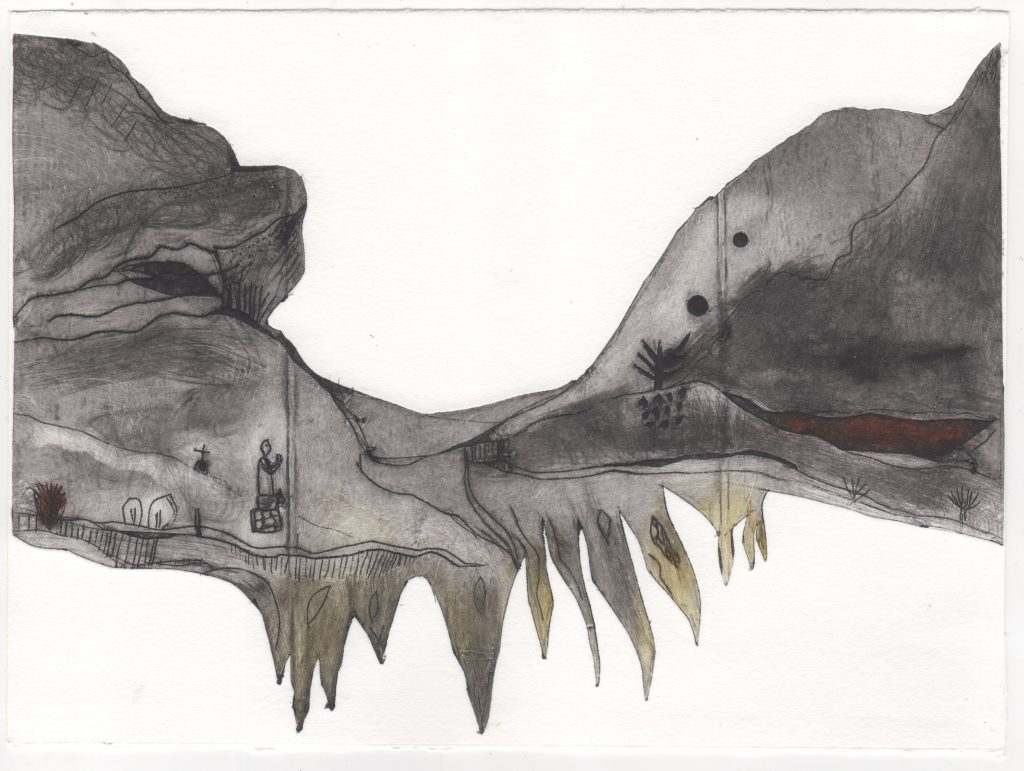
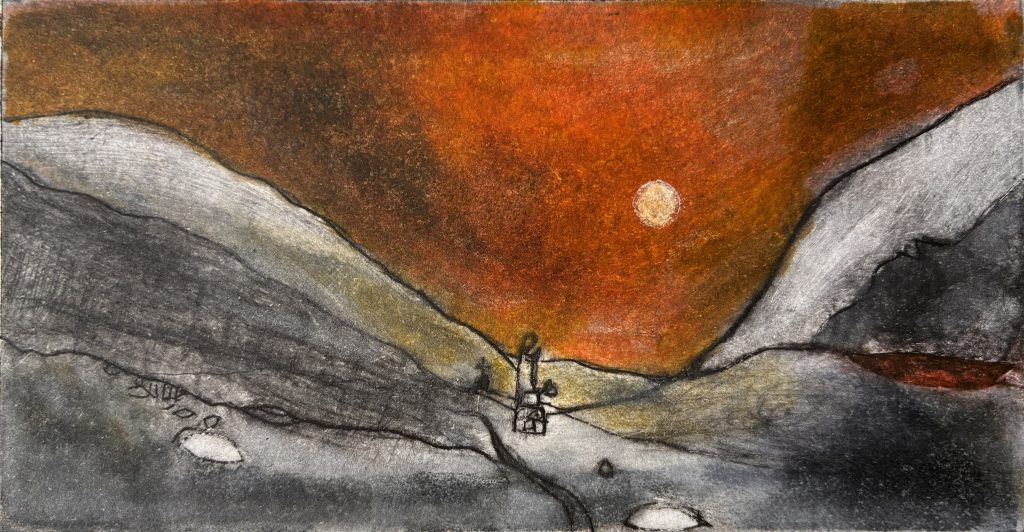
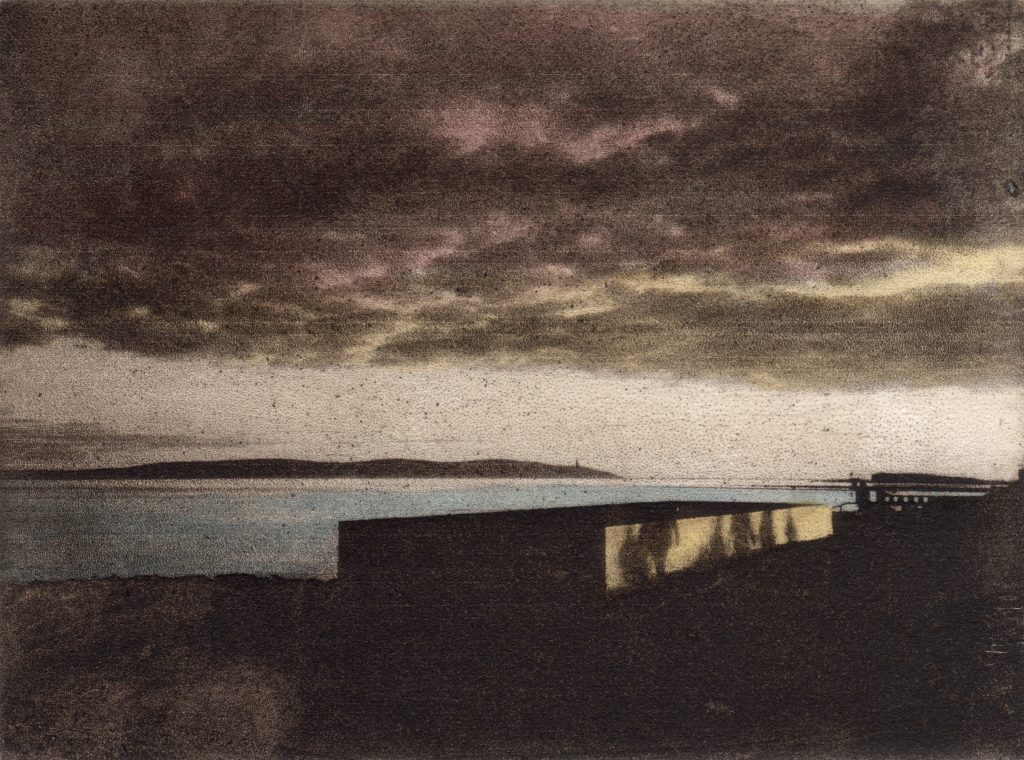
In Tim Robinson’s book, Listening to the Wind, (which is the first volume in his Connemara Trilogy), the chapter Curse and Blessing talks about a day climbing to the sacred site of Mám Éan.  Mám Éan ‘the pass of the birds’ – is one of the two main passes through the Maumturk mountain range, the old boundary between Connemara proper and Joyce Country in County Galway. According to legend, St Patrick was travelling through the Maam Valley, on his return from Croagh Patrick in County Mayo, when he climbed up to the top of the pass, and blessed the land to the west – Connemara. That night, he slept in a little hole in the hillside known as Patrick’s Bed (Leaba Phádraic), but ventured no further into Connemara. In time, Mám Éan or Maumean became an important place of pilgrimage where locals gathered for an annual ‘pattern’– a day when people prayed (and celebrated) at a holy site – in honour of St Patrick. The pilgrimage had almost died out by the mid 1900’s due to faction fighting but was revived in the 1980’s.

Robinson, Tim, 2006. Connemara: Listening to the Wind. Penguin Ireland

“I began to pick my way down towards the main road, which looked like a piece of string forgotten on the valley floor below. The first few hundred yards of descent were of bare, angular stones glinting with crystalline veins. Then came hundreds of yards of heather-cushions embroidered with tiny, vivid flower-motifs. I strolled down a glen by a stream with fingerling trout in its pools, to the village of Seanadh Chaola, where there were children riding a donkey, who waved to me.

The grown-ups were in the fields beyond, turning hay in the sunshine; they paused from their work and waved to me too. It was a moment left over from Eden. I followed the lane down to the main road, and waited hopefully and wearily for a lift back through the little bit of the world I am only now, after so many years, beginning to know as home.”

The Mountains Are Calling…

An exhibition for World Book Night 2026

Bower Ashton Library, UWE Bristol

until Friday 31st July 2026 read more at the link below:

Connacht Call Out 11-20 July 2025, Oughterard Courthouse

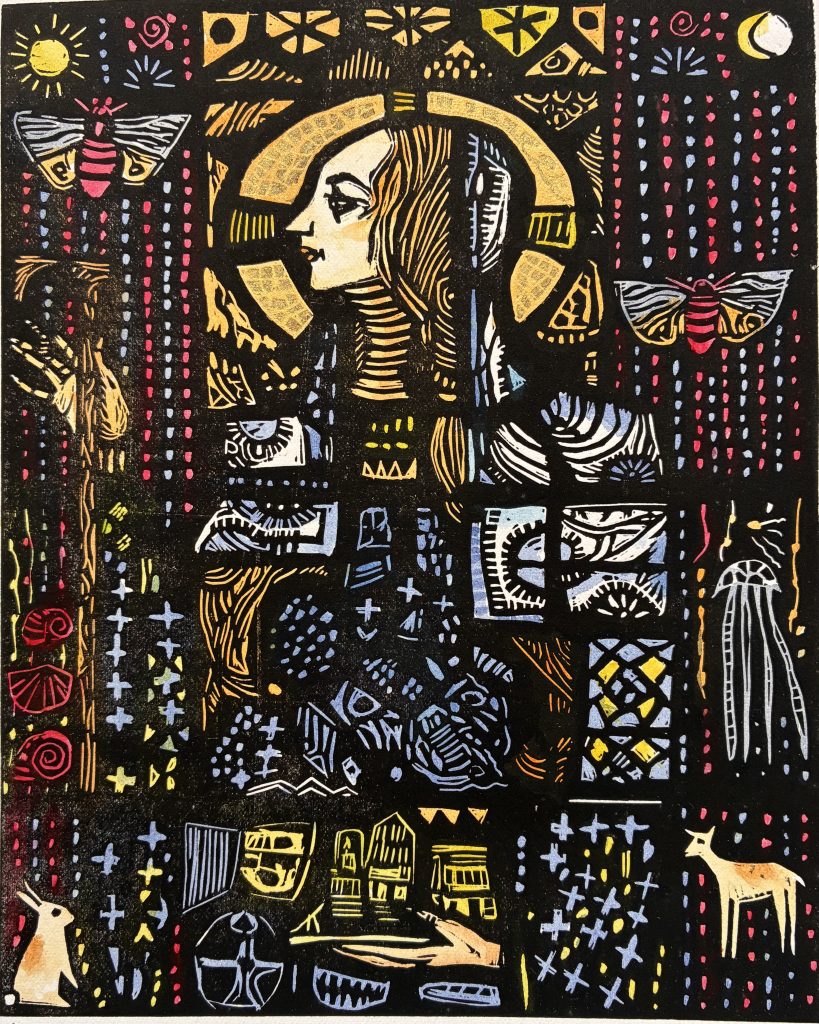
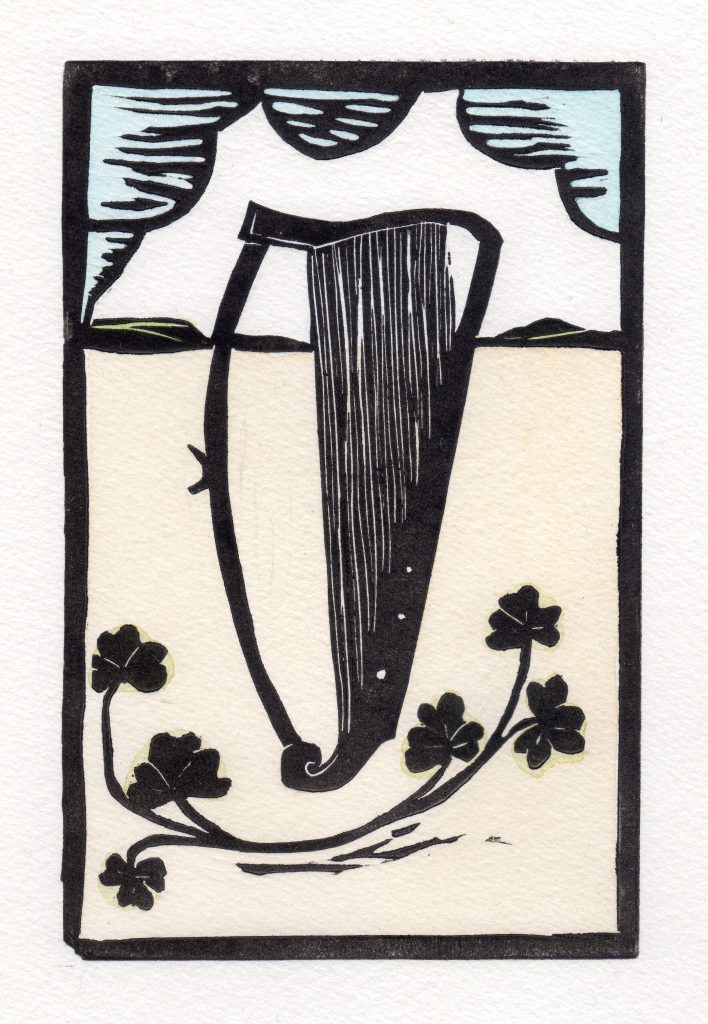
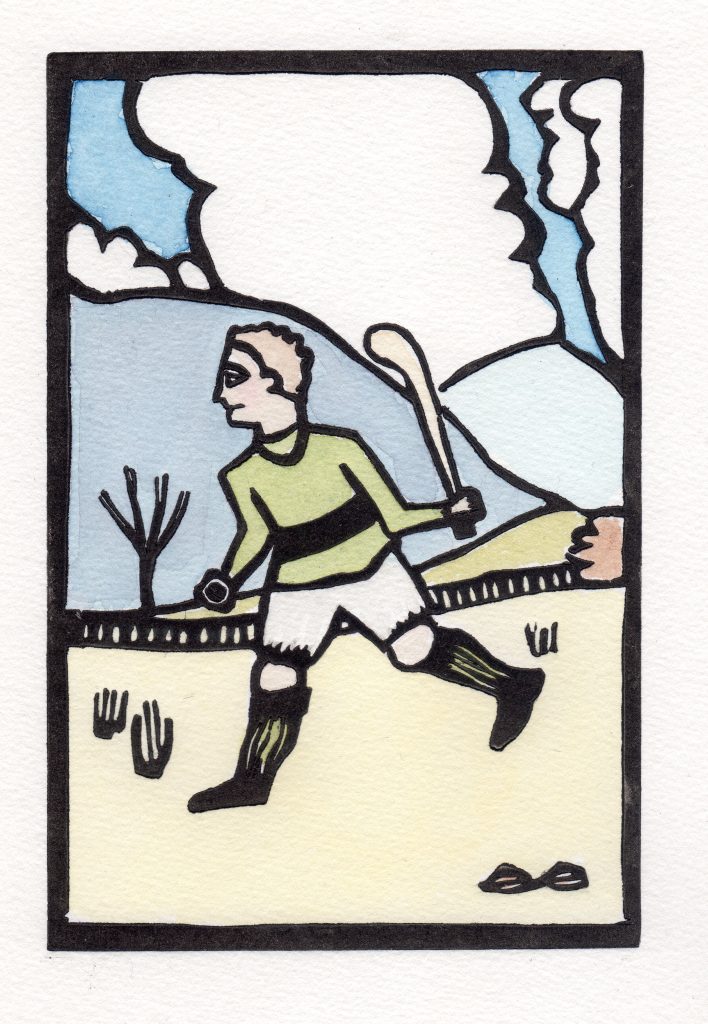
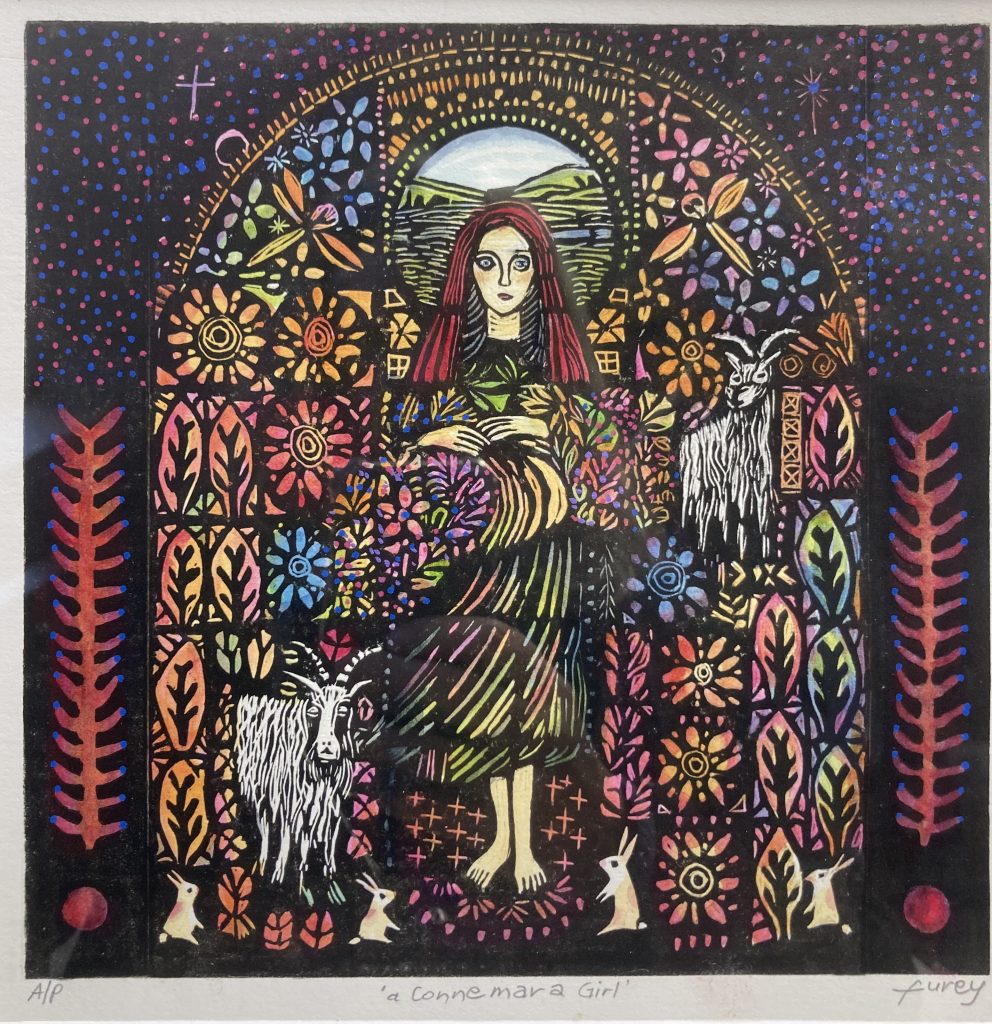
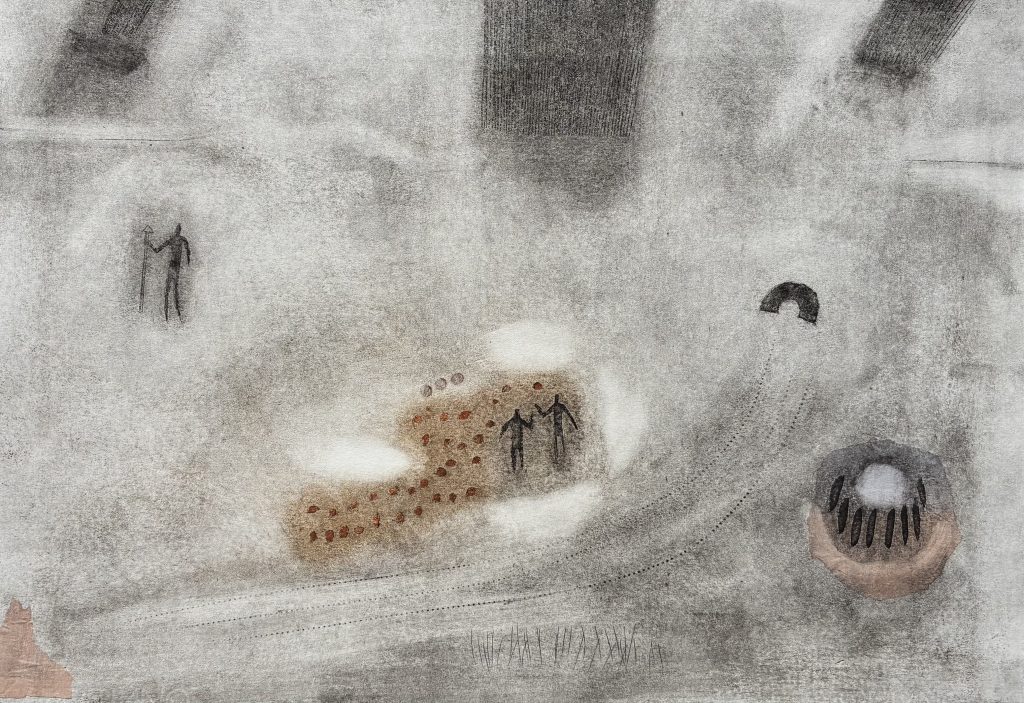
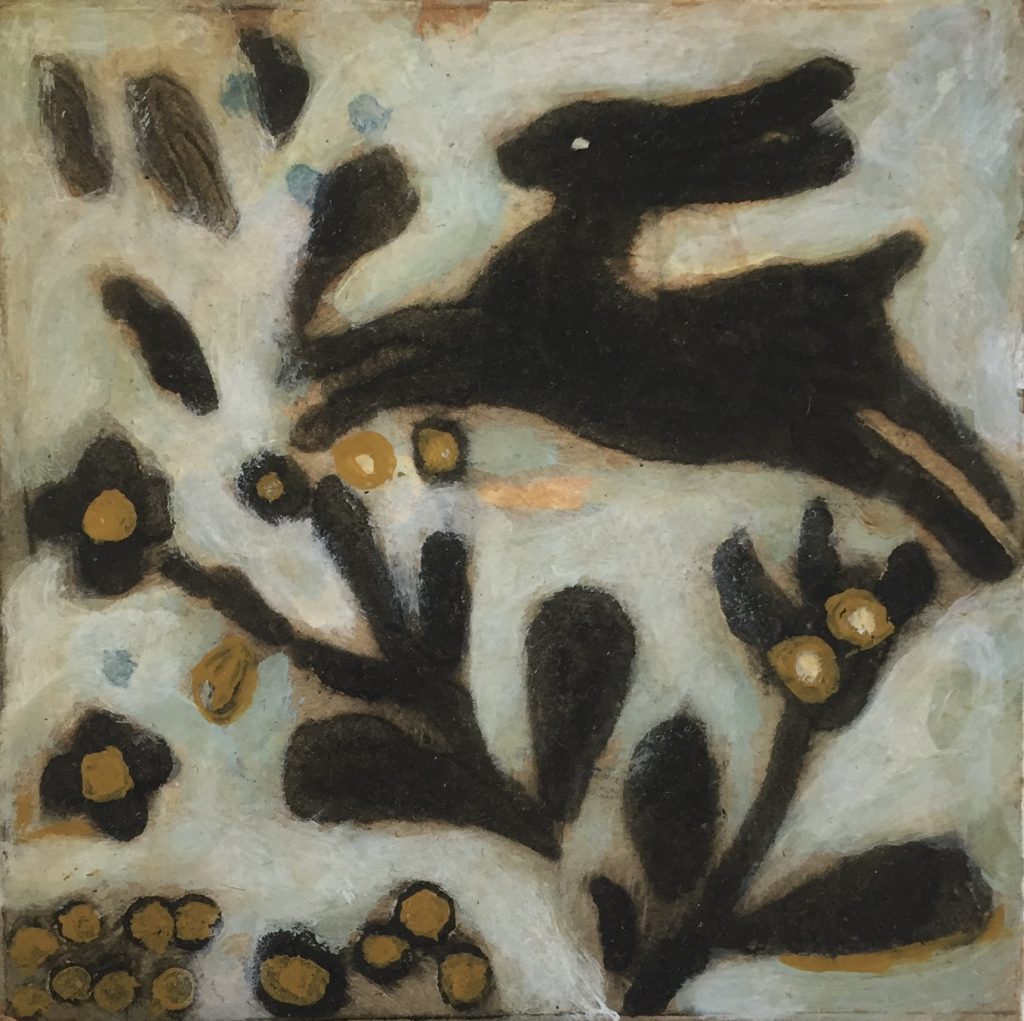
Folkart, folklore and folktales are the inspiration for these mixed media works. The initial plate is carborundum. The prints include hand colouring and chine collé (a tissue-thin paper, cut to the size of the printing plate is placed on top of the inked plate and run together with the support paper through the printing press. The process creates a subtle, delicate backdrop to the printed image. Chine is the French word for China, referring to the fact that the thin paper originally used with this technique was imported from China. Collé is the French word for “glued.”). 

Recent work references history, myth and memory. Processes include painting, drawing and mixed media prints which combine drypoint, carborundum, collagraph, monoprinting and chine collé.